X-Force’s Mid-1990s Run Defined the Team’s Best Era
ComicBook.com reports that Marvel’s X-Force (Vol. 1) reached its peak popularity and storytelling quality in the mid-1990s, specifically after issue #44, which marked a pivotal shift in the team’s direction. The publication notes that this era, spanning from 1995 to 1998, became the book that X-Force was always meant to be—a period of character-driven storytelling that contrasted sharply with the team’s earlier, more extreme iterations.
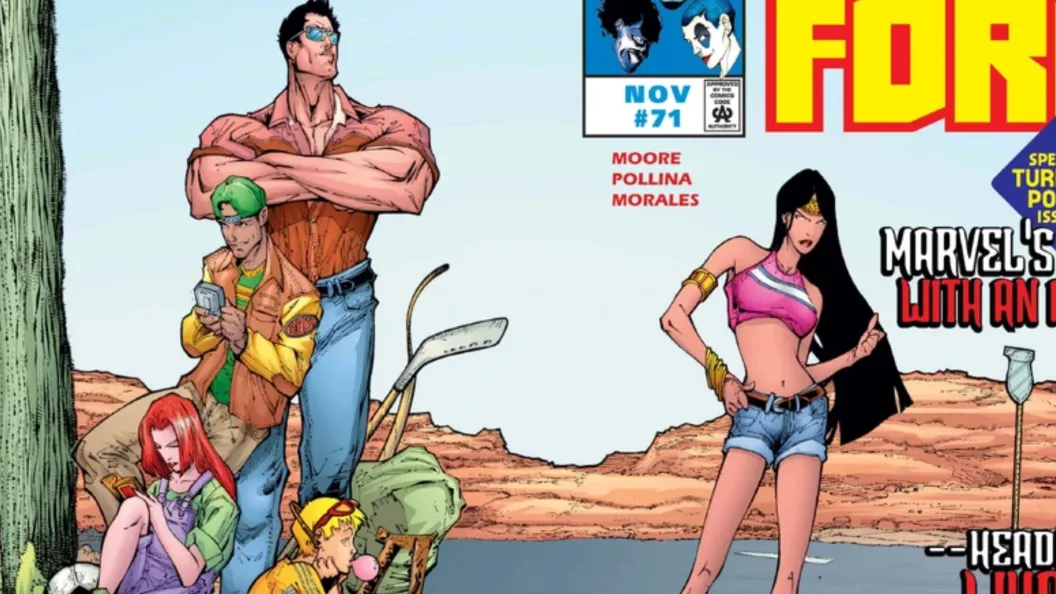
The transformation began following the conclusion of Age of Apocalypse (AoA), when Marvel restructured X-Force under new creative leadership. Longtime writer Fabian Nicieza departed the title, and Jeph Loeb took over as writer, while artist Adam Pollina replaced Tony Daniel. This issue, #44, initiated a run that lasted until the end of the decade, shifting the team from a violent, grimacing '90s superhero book to a more grounded, character-focused narrative.
The Creative Shift That Reshaped X-Force
Prior to issue #44, X-Force was widely criticized for its association with Rob Liefeld’s run, which emphasized cyberpunk aesthetics, over-the-top action, and minimal character development. Liefeld’s departure to launch Image Comics in 1992 left Marvel scrambling to find a new creative direction, resulting in a series of inconsistent art styles and storytelling approaches. By the mid-1990s, however, the team had evolved into a cohesive unit with a roster that included Cable, Domino, Sunspot, Boom Boom, Warpath, Siryn, and Caliban—replacing earlier members like Feral and Shatterstar.
Under Loeb’s guidance, X-Force became a 'young mutant team' focused on personal growth and relationships. Cable temporarily left the team to return to the X-Mansion, where he promoted Cannonball to the X-Men. This period saw the team navigate complex storylines, including battles against Sabretooth, the return of the Hellfire Club, and conflicts with Holocaust. The shift was particularly notable for its emphasis on character development: Sunspot and Boom Boom began dating, Warpath met Risque, and Siryn gained depth through her evolving role.
Pollina’s Artistry Elevated the Series
A critical factor in X-Force’s success during this era was Adam Pollina’s artwork. Unlike the more polished styles of earlier artists, Pollina’s work was initially described as 'weird' and 'ugly' due to its unconventional linework and page layouts. However, over time, his detailed character expressions and dynamic storytelling transformed the series into a masterclass in comic art. Pollina’s ability to balance the team’s low-key purple outfits with intricate character interactions made the series stand out in the 1990s comic landscape.
The publication highlights that Pollina’s art became increasingly refined, with his work capturing the 'ennui' of Generation X—a cultural moment that resonated with the team’s themes of adolescence and identity. This period also saw the team’s roster evolve to include Dani Moonstar, who rejoining the group after her absence in the early '90s, further strengthening the team’s narrative cohesion.
Why This Era Matters Today
While X-Force’s early '90s run under Liefeld is often criticized for its lack of character depth, the mid-1990s era represents a rare period where the team’s storylines and characters truly flourished. The series’ focus on character-driven narratives and realistic relationships contrasted with the more action-heavy, style-focused approach of the previous era. This shift not only revitalized X-Force but also set the stage for its later evolution into the mutant kill squad in the 21st century.
The publication notes that X-Force’s mid-1990s run remains the most beloved era for many fans, who credit it with delivering the kind of character-focused stories that X-Men enthusiasts have long sought. Despite the team’s later decline into the Counter X line in 2000, this period is widely regarded as the team’s 'greatest era,' a sentiment that has persisted among both longtime fans and newer readers.
The Legacy of X-Force’s Mid-1990s Run
For comic book historians, X-Force’s mid-1990s run is a testament to the power of creative reinvention. The team’s ability to pivot from a violent, action-oriented series to a character-driven narrative demonstrates how even established franchises can evolve to meet the needs of their audience. This era also highlights the importance of artistic vision in comic storytelling, as Pollina’s work became a defining element of the series’ success.
The publication emphasizes that X-Force’s mid-1990s run remains a benchmark for what a well-crafted comic book series should look like—balancing character development, thematic depth, and visual storytelling. While the team’s later iterations have been criticized for their shift toward more extreme narratives, this period stands out as a time when X-Force truly fulfilled its potential.
Entertainment news
About this breakdown
PublishedNovember 24, 2026
Last updatedNovember 24, 2026
Topics coveredX-Force’s Mid-1990s Run Defined the Team’s Best EraThe Creative Shift That Reshaped X-ForcePollina’s Artistry Elevated the SeriesWhy This Era Matters Today
EpisodeBreakdown may use automated tools to assist research, drafting, and formatting. Published pages are governed by our editorial and corrections policies, and source links are shown when they are available in the article record.
Discovery source: ComicBook.com. The source identifies where the topic was discovered; EpisodeBreakdown is responsible for the commentary published on this page.
Reader response
What did you think?
Reactions and poll results are based on real reader responses. No account is required.
Weekly editorial digest
Get the next breakdown in your inbox
Choose what you follow and receive one focused email with original anime, movie, TV, ending, timeline, and character coverage.
One email a weekNo spamCancel anytime