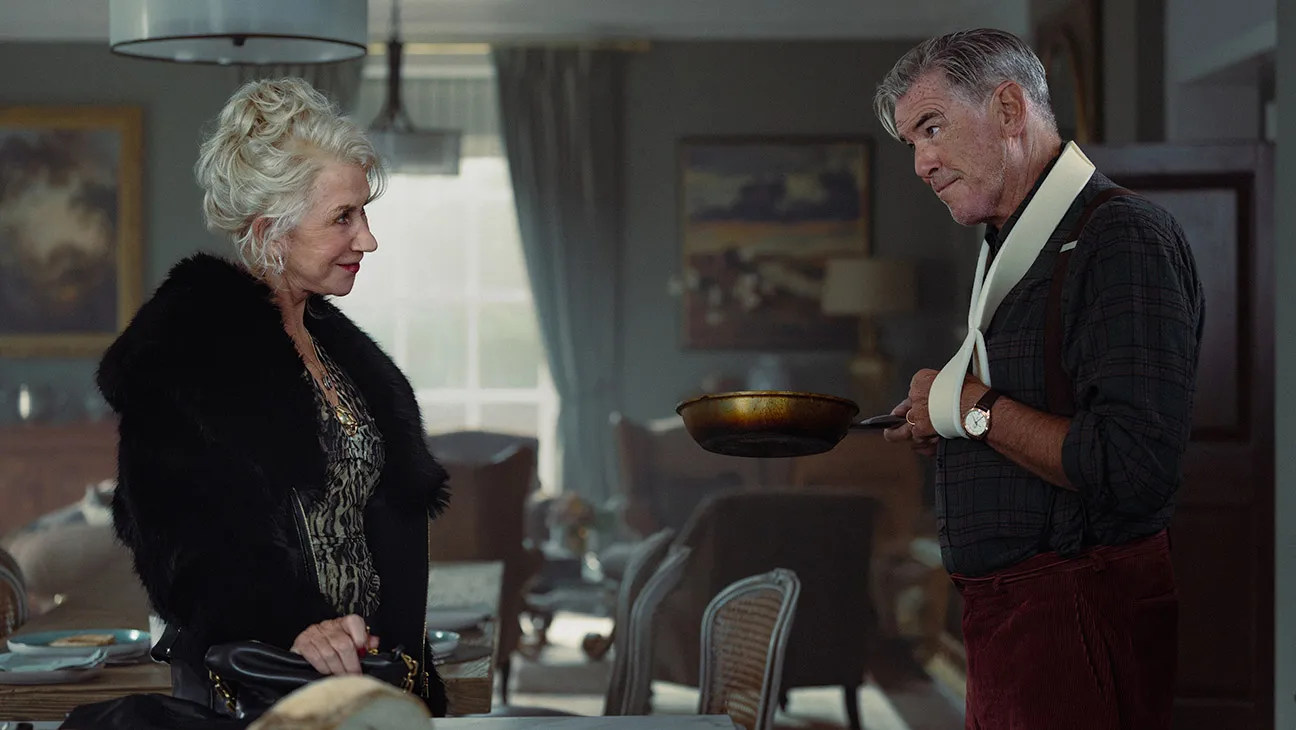
Pierce Brosnan and Helen Mirren Confirm MobLand Season 2 Details
Pierce Brosnan and Helen Mirren discuss the second season of MobLand, revealing exciting developments.
Austin Abrams shares his experiences with challenging stunts in the new Resident Evil film directed by Zach Cregger, now in theaters.

Austin Abrams, the star of the newly released Resident Evil adaptation, shared his experiences regarding the demanding stunt sequences he undertook while filming. Directed by Zach Cregger, this adaptation puts audiences directly in the player's point of view, a significant departure from previous cinematic entries in the franchise. The comments were published by Deadline on September 19, 2026.
Abrams revealed his initial unfamiliarity with the Resident Evil franchise, famously admitting that he had never engaged with the games or films before taking on the lead role. He explained, "Not that I was like an anti-fan... the games felt too frightening to engage with." His comments offer a glimpse into the mindset of an actor tackling a role in a beloved horror franchise without prior experience.
Discussing the intensity of the stunt work, Abrams described one particularly harrowing scene where he had to run down a snow-covered road while zombies jumped from rooftops. He recounted how precarious the situation was, emphasizing that one misstep could have resulted in disaster. "You don't want to fuck up the shot," he stated, underscoring the high stakes involved in creating a thrilling action sequence that aligns with audience expectations for horror and survival narratives.
Cregger noted that the scene would have been extremely dangerous if anything had gone wrong, revealing the filmmakers’ commitment to producing thrilling, authentic experiences rather than relying purely on CGI.
Alongside his stunt work, Abrams worked closely with Cregger to develop his character, Brian, who is an entirely original creation not present in the video games. Reflecting on the collaborative process, he expressed gratitude toward Cregger and noted the complexity of creating a compelling character in a high-stakes environment. He described the challenge of infusing Brian with tangible emotions and depth rather than simply serving as an avatar for players.
The character is intended to resonate with audiences, encapsulating the psychological strain of facing life-or-death scenarios while grappling with personal insecurities and relationship dynamics. Abrams highlighted how survival horror pushes the character to reassess his life choices and relationships.
Resident Evil, now screening in theaters, marks a significant addition to the franchise as it attempts to recapture the essence of the original games while offering a fresh perspective through its narrative and character work. The audience is positioned to empathize more deeply with Brian’s journey, thanks to Abrams’ candid exploration of his motivations and fears. This character-driven approach could resonate with both longtime fans of the franchise and newcomers attracted by the film's thrilling premise.
The adaptation has the potential to draw attention not only for its stunts and horror elements but also for its central character’s emotional journey, which has been a focus in recent horror narratives.
The insights from Austin Abrams provide a deeper understanding of how filmmakers are trying to revitalize the Resident Evil franchise for new audiences. As the adaptation continues to screen, fans and newcomers alike may find themselves invested not only in the horror elements but also in the character dynamics introduced by Zach Cregger’s vision. The bridge between gaming experiences and cinematic storytelling remains a point of interest, especially as studios explore ways to appeal to diverse audience demographics.
For more on related projects linked to the Resident Evil franchise, see our coverage on Siobhan McGroarty’s latest adaptation and updates on Zach Cregger’s previous film, Weapons.
Entertainment news
EpisodeBreakdown may use automated tools to assist research, drafting, and formatting. Published pages are governed by our editorial and corrections policies, and source links are shown when they are available in the article record.
Discovery source: Deadline. The source identifies where the topic was discovered; EpisodeBreakdown is responsible for the commentary published on this page.
Reader response
Reactions and poll results are based on real reader responses. No account is required.