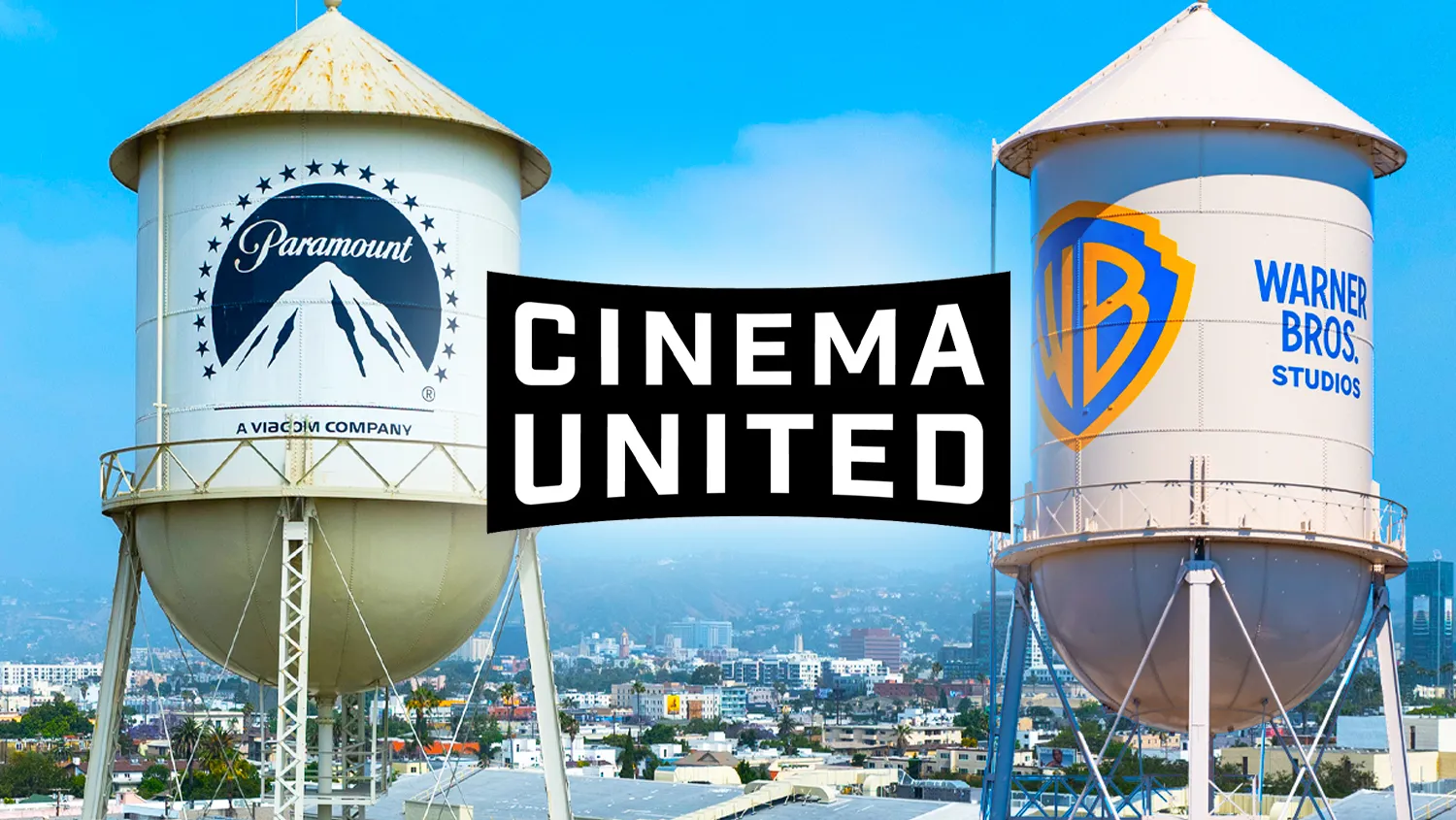
Movie theater trade association Cinema United, who opposed Warner Bros Discovery's acquisition from the start, released a statement commending the four state attorneys general's settlement with Paramount. The consent decree includes increased film production for five years, theatrical exclusivity, wide distribution, cost prohibitions, and continued catalog access.
Cinema United Commends Paramount-WBD Settlement for Theatrical Benefits
Movie theater trade association Cinema United, who was an opponent of a Warner Bros Discovery acquisition from the onset, released a statement this morning commending the four state attorneys general’s work on settling the antitrust lawsuit with Paramount. The group emphasized that the consent decree includes language on increased film production for five years, meaningful theatrical exclusivity, wide distribution, prohibitions on cost increases, and continued access to the catalogs of Paramount and Warner Bros.
The statement, issued by Cinema United President and CEO Michael O'Leary, highlighted that the deal addresses key concerns raised by the organization throughout the merger process. "The agreement announced yesterday accomplishes many of exhibition’s objectives," O'Leary stated. "While no settlement can eliminate all risk from a merger of this size, these conditions will enable our industry to adapt and succeed in a rapidly changing media environment."
Settlement Terms Favor Theatrical Industry
Cinema United advocated for several specific provisions that were included in the consent decree:
Five-year film production mandate: The deal requires Paramount to release at least 20 of 30 films in the first two years and 21 of 32 films in years three to five into wide distribution.
Wide release definition: The consent decree adopts a definition of "wide release" as 2,000 screens, a standard Cinema United argued for.
Theatrical exclusivity window: Paramount agrees to a 45-day window of theatrical exclusivity followed by a 90-day SVOD window, prohibiting PVOD marketing prior to Day 30.
Cost stabilization: The settlement includes prohibitions on cost increases for exhibitors.
These terms directly address concerns Cinema United raised about the potential for a merger to consolidate control over film production and distribution in the hands of a single entity.
Context of Cinema United's Opposition
Cinema United has been vocal about the risks of the Paramount-WBD merger since early 2026. The organization warned that such a consolidation could lead to a 40% concentration of box office revenue in the hands of one studio, echoing concerns from the Disney-Fox merger that resulted in $1 billion less in box office revenue between 2016 and 2025.
In January 2026, Cinema United presented a statement to the U.S. House Committee cautioning that a Paramount-WBD merger would "further consolidate control over production and distribution of motion pictures in the hands of a single, dominant, global streaming platform." The group also highlighted potential impacts on Main Street businesses and the diversity of movie options.
Industry Impact and Next Steps
The settlement marks a significant shift in the antitrust landscape for the film industry. Cinema United noted that the deal "strongly validates that movie theatres are the beating heart of Main Street America and the entire U.S. film industry." The organization has been instrumental in advocating for the consent decree’s terms, which were developed after nearly a year of negotiations.
With the settlement finalized, Cinema United’s focus now shifts to ensuring the terms are implemented effectively. The group has previously warned that the merger could lead to job losses and reduced diversity in film offerings, but the consent decree aims to mitigate these risks through its production and distribution mandates.
The settlement follows a series of legal maneuvers by the four state attorneys general, who had been pursuing the antitrust lawsuit since early 2026. Cinema United’s involvement in the negotiations has been critical to securing terms that protect exhibitors from the potential downsides of a merger.
Cinema United’s statement underscores the organization’s long-standing commitment to safeguarding theaters of all sizes from the harms of legacy studio consolidation. The group has been a consistent advocate for the film industry’s interests, particularly in the context of the Paramount-WBD merger.
Cinema United Commends Paramount-WBD Settlement for Theatrical BenefitsSettlement Terms Favor Theatrical IndustryContext of Cinema United's OppositionIndustry Impact and Next Steps
EpisodeBreakdown may use automated tools to assist research, drafting, and formatting. Published pages are governed by our editorial and corrections policies, and source links are shown when they are available in the article record.
Discovery source:Deadline. The source identifies where the topic was discovered; EpisodeBreakdown is responsible for the commentary published on this page.
Reader response
What did you think?
Be the first to react
Reactions and poll results are based on real reader responses. No account is required.
Continue the story
movies
Netflix Submits 'Too Much To Ask' for Oscars Original Song Category
Netflix has officially submitted Kimbra's song 'Too Much To Ask' from the animated film 'Ray Gunn' for the Oscars' original song category, per Variety. The track, performed by Scarlett Johansson, is part of Brad Bird's Metropia-set feature.Read next →