ComicBook.com highlights five Marvel miniseries that demonstrate the publisher's ability to craft standalone superhero narratives comparable to DC's acclaimed prestige titles, including Hulk: Future Imperfect, Marvel Boy, Infinity Gauntlet, Squadron Supreme, and The Vision.
ComicBook.com has published a list of five Marvel miniseries that showcase the publisher's capacity for standalone superhero storytelling on par with DC's prestige titles. The article, authored by David Harth, a professional writer with six years of experience and former staff writer at CBR.com, identifies these miniseries as definitive examples of Marvel's ability to deliver self-contained narratives that require minimal prior knowledge while maintaining critical acclaim.
The piece begins by contextualizing the longstanding debate between Marvel and DC regarding standalone storytelling. DC Comics has historically been praised for its prestige titles like Watchmen, All-Star Superman, Crisis on Infinite Earths, and Green Lantern: Rebirth, which are often cited as benchmarks for standalone superhero narratives. The article notes that while DC has traditionally been seen as the superior publisher for such stories, Marvel has produced numerous high-quality standalone works that can stand alone without extensive background knowledge.
The five miniseries highlighted by ComicBook.com are:
Hulk: Future Imperfect (2000): A six-issue miniseries written by Peter David and illustrated by George Perez, this story follows the Hulk in a dystopian future where he confronts the Maestro, a villain who is his future self. The narrative explores the Hulk's internal conflict and the consequences of his actions in a post-nuclear war world.
Marvel Boy (1985): A 12-issue miniseries by Grant Morrison and J.G. Jones, this story centers on Noh-Varr, a Kree survivor who seeks revenge against humanity after his ship is destroyed. The series is noted for its critique of modern capitalism and its sci-fi themes.
Infinity Gauntlet (1978): A six-issue series by Jim Starlin, George Perez, and Ron Lim, this miniseries introduced Thanos as a major villain and became the foundation for the Marvel Cinematic Universe. It is celebrated for its character depth and action sequences.
Squadron Supreme (1980): A 12-issue series by Mark Gruenwald, Bob Hall, Paul Ryan, and John Buscema, this story follows an alternate Earth team that establishes a benevolent dictatorship to save the world, exploring the ethical implications of superhero rule.
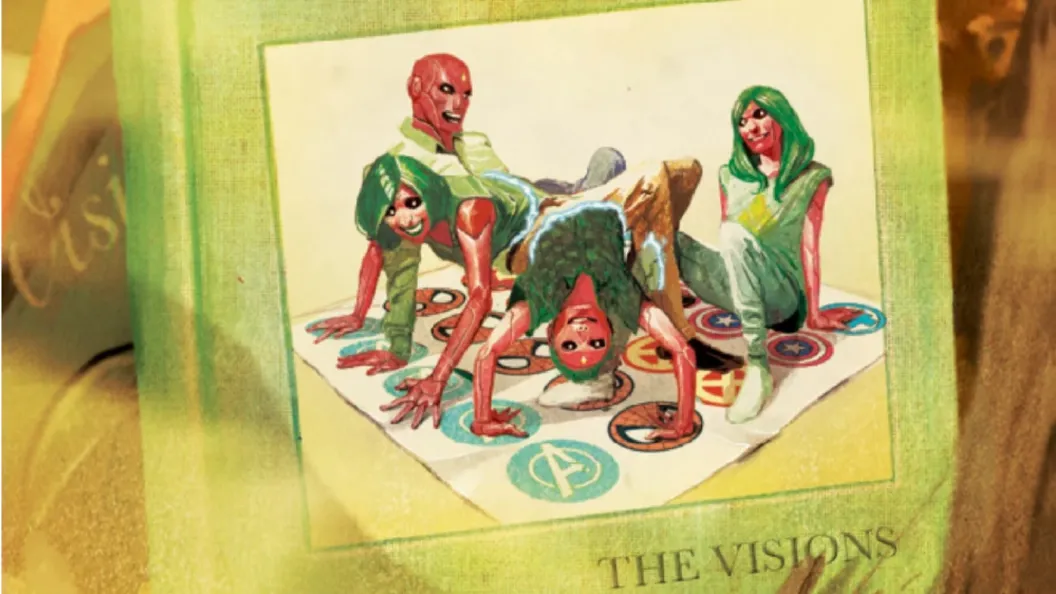
The Vision (2017–2018): A 12-issue series by Tom King and Gabriel Hernandez Walda, this miniseries follows the synthetic superhero Vision as he navigates family, identity, and the blurred line between human and machine.
Each of these miniseries is described as a self-contained narrative that can be understood without prior knowledge of Marvel's broader universe. The article emphasizes that Marvel's strength lies in its ability to craft stories that are both thematically rich and accessible, particularly in the context of standalone storytelling.
The piece also addresses the broader industry context, noting that while DC has been celebrated for its standalone titles, Marvel has consistently produced high-quality stories that resonate with both new and experienced readers. The article argues that Marvel's approach to storytelling—focusing on character-driven narratives and thematic depth—complements its strengths in ongoing series and interconnected universes.
For readers interested in exploring these stories, ComicBook.com provides detailed descriptions of each miniseries, including their publication dates, creative teams, and thematic significance. The list serves as a curated guide for fans seeking to understand Marvel's contributions to standalone superhero storytelling without the need for extensive background knowledge.
The article concludes by reinforcing Marvel's position in the comic book industry as a publisher capable of delivering exceptional standalone narratives that rival DC's achievements. This list not only highlights specific works but also underscores the importance of standalone storytelling in the broader context of superhero comics.
EpisodeBreakdown may use automated tools to assist research, drafting, and formatting. Published pages are governed by our editorial and corrections policies, and source links are shown when they are available in the article record.
Discovery source:ComicBook.com. The source identifies where the topic was discovered; EpisodeBreakdown is responsible for the commentary published on this page.
Reader response
What did you think?
Be the first to react
Reactions and poll results are based on real reader responses. No account is required.
Continue the story
anime
Nue's Exorcist Anime Adaptation Rumored After 3-Year Wait
ComicBook.com reports a potential anime adaptation for Kota Kawae's Nue's Exorcist, which debuted in Shueisha's Weekly Shonen Jump in 2023 and has 160+ chapters. A newly registered domain suggests a possible announcement, though Shueisha has not confirmed the project.Read next →