‘Paper Tiger’ and ‘Musk’ Documentary Featured at 2026 SFIFF
The 2026 Santa Fe International Film Festival showcases key titles including 'Paper Tiger' and 'Musk', marking an exciting lineup for this year.
At the Lumière Summit, industry leaders called for urgent reforms to address the stagnation of women's participation in behind-camera roles, highlighting a gap in representation.
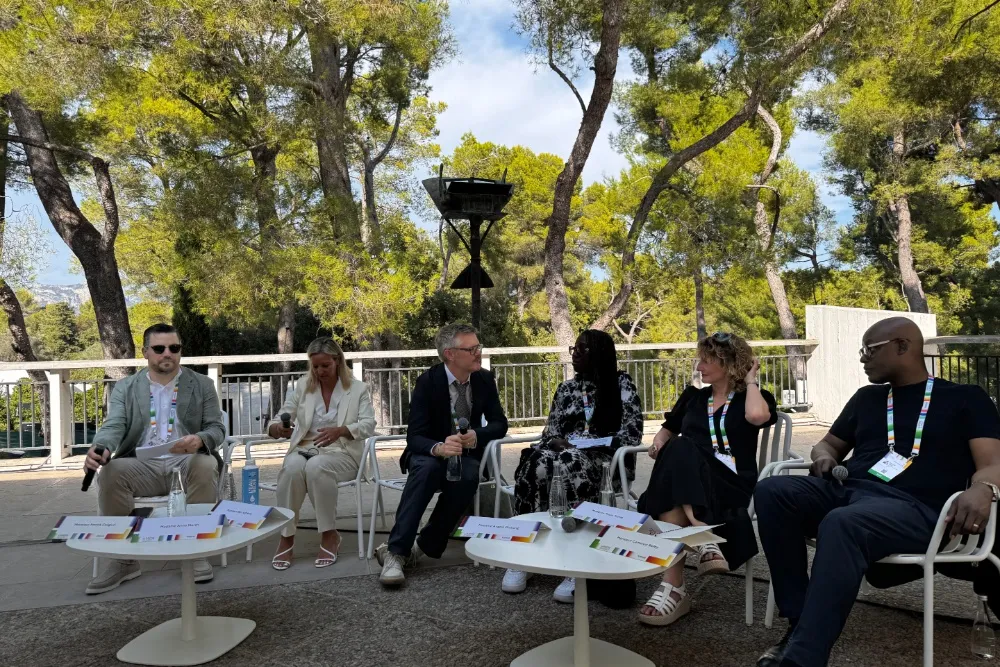
On September 7, 2026, at the Lumière Summit, industry leaders voiced their urgent call for structural changes to address the persistent gender gap in the film industry. The discussion began with the concerning statistic that only 23% of key behind-camera roles are held by women, an increase from 17% when the Celluloid Ceiling study started in 1998. According to Variety, this panel, titled “Safer Sets, Different Stories: Why Gender Balance Matters,” featured influential figures from major entities like StudioCanal and Canal+.
During the panel, Anna Marsh, chief executive of StudioCanal and deputy chief executive of Canal+, emphasized that the industry should view gender equity not as a burden but as an investment in its future. She noted the disparity in funding allocated to female directors, revealing that a woman director's average budget is only 44% of that assigned to their male counterparts. Marsh highlighted that while 50% of film school graduates are women, only one in six directors is a woman by the time they complete their third feature.
Ben Roberts, director general of the British Film Institute (BFI), noted progress in women-directed films using data from the BFI's Sight and Sound poll. He stated that initially, only three of the top 100 films were directed by women in 2012, while by 2022 that number had risen to 11. Roberts drew attention to the BFI's Inclusion Standards and the necessity of aligning with international partners on shared minimum standards to promote gender equity.
Panelists also acknowledged the necessity of structural accountability in reducing the gender gap. Tricia Tuttle, director of the Berlinale festival, shared her festival's transformation from zero films directed by women in 2005 to 40% in 2025. She emphasized that increased transparency has made curators more aware of their decision-making processes. Cameron Bailey, chief executive of the Toronto Film Festival, mentioned that the festival's programming team has achieved approximately 50% female directors over the past decade, with an increase in female-directed films in TIFF's 2026 selection.
Films often overlook the struggles faced by women in the industry. Angèle Diabang, a filmmaker from Senegal, discussed her founding of the Mousso Institute, which trains women in technical roles within the film sector, offering the program free of charge. Her initiative aims to empower women through skill development and reduce reliance on gender quotas for inclusion on sets.
Additionally, the CNC in France has been pioneering gender training initiatives and has recently introduced a bonus-penalty mechanism tied to gender targets. Beginning in 2027, productions with fewer than 40% women in crew roles will face penalties, while those meeting or exceeding this threshold will receive bonuses, a move praised by industry leaders present.
Moderator Patrick Caligiuri concluded the session with hope that future Lumière Summits would not require discussions on gender equity, highlighting the panel's commitment to achieving tangible change. The leaders not only pointed out current discrepancies but also articulated the creative losses incurred due to the absence of female voices in cinema.
The discussions at the Lumière Summit highlight a crucial moment in the film industry as it strives to establish a more equitable landscape for women. With industry-wide recognition of the gender gap and actionable insights shared by prominent figures, there is potential for gradual change in representation behind the camera. The commitment to structural fixes, clear metrics for success, and the emphasis on education could signify a meaningful shift toward inclusivity in filmmaking.
For further context on industry initiatives, you can read more on related efforts such as the IRIS Initiative for Independent Cinema and actions discussed in the context of the Rendez-Vous Market.
Entertainment news
EpisodeBreakdown may use automated tools to assist research, drafting, and formatting. Published pages are governed by our editorial and corrections policies, and source links are shown when they are available in the article record.
Discovery source: Variety. The source identifies where the topic was discovered; EpisodeBreakdown is responsible for the commentary published on this page.
Reader response
Reactions and poll results are based on real reader responses. No account is required.