Spider-Man: Brand New Day's Box Office Marvel
Analyzing the success of Spider-Man: Brand New Day's incredible box office performance and deeper themes.
Unveiling the themes, character choices, and emotional narrative of The Time Machine, an underrated gem of time travel.
What is the central question posed by The Time Machine? It examines the moral implications of time travel: Can we change the past to alter the future for the better? The film ultimately reveals that some events are immutable, emphasizing the emotional weight of loss and acceptance.
This 2002 adaptation of H.G. Wells’ novella, despite its mixed reception, provides a surprisingly ambitious narrative that aligns with modern existential themes in sci-fi. It's now available for free streaming on Pluto TV, making it an opportune moment to revisit its complex storyline and themes.
At its core, The Time Machine centers on Dr. Alexander Hartdegen (Guy Pearce), a brilliant inventor navigated by his deep, unresolved grief. Following the tragic death of his fiancée, Emma, in a mugging gone wrong, Hartdegen becomes consumed by his desire to reverse time. This impulse defines the movie’s emotional journey. In simple terms, its profound conflict arises from Hartdegen’s struggle between wanting to save Emma and grappling with the reality that some events must occur.
One poignant moment occurs early on when Hartdegen reflects on his attempts to rewrite history. After realizing he cannot save Emma, he famously states that he can “come back a thousand times, see her die a thousand ways.” This pivotal scene not only solidifies his emotional journey but also lays the groundwork for understanding time travel as not merely a scientific endeavor, but rather an exploration of human experience and suffering.
Unlike the original novella, where the protagonist travels for intellectual curiosity, Hartdegen's motivations are deeply personal. He doesn’t seek knowledge about time for its own sake but is propelled by loss. This thematic shift invites viewers to empathize with his plight and presents a more accessible, human-centered narrative.
As Hartdegen ventures forward through time, director Simon Wells employs mesmerizing visuals that transition from the past to various future states of Earth. The time machine itself is aesthetically intriguing, offering a unique visual experience where the environment morphs around the traveling vehicle. However, it’s not simply style over substance; these scenes encapsulate the passage of time and the inevitability of change.
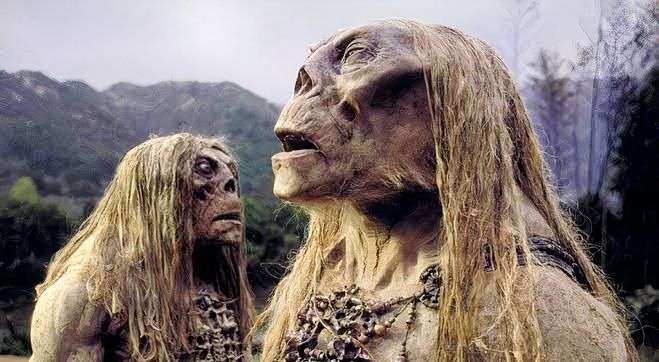
Upon arriving in the year 802,701, Hartdegen discovers a divided humanity: the peaceful Eloi, who seem to live idyllic lives above ground, and the monstrous Morlocks, who dwell below. This dichotomy offers various philosophical questions about evolution and society's trajectory. Confirmed events in the film reveal that Hartdegen becomes embroiled in a conflict between these two factions, turning the story into an action-driven adventure.
The juxtaposition between the Eloi’s naive existence and the Morlocks’ sinister nature comments on the potential consequences of societal regression and class divide. While this shift towards action might seem jarring, it’s integral to Hartdegen’s evolution as a character—where he initially sought personal redemption, he ultimately embraces a larger fight for the future of humanity.
While the Morlocks may seem to detract from the original philosophical themes, they serve an essential purpose: they force Hartdegen to confront his obsession with the past. Rather than allowing his grief to consume him, he fights for the survival of a new generation and becomes a hero not just for Emma but for all of humanity. In this sense, the film grapples with the idea of redemption through action, posing the question: Can one truly find purpose beyond personal loss?
Hartdegen's transition from sorrow to responsibility resonates with viewers facing their own losses. Thus, the Morlocks symbolize the emotional turmoil and darkness that can arise from unresolved grief, compelling us to confront our own demons as we navigate through time.
The conclusion of The Time Machine, where Hartdegen believes he has found purpose in the fight against the Morlocks, feels somewhat rushed. The central emotional conflict—coming to terms with Emma's death—finds resolution too early in the narrative, leading to a disjointed second half filled with actions that lack the gravitas seen earlier. While he ultimately decides to focus on the future, the shift from philosophical introspection to adventure often leaves viewers questioning whether the storyline delivers on its initial promise.
Even with its flawed execution, the film’s climax reinforces the theme that time travel is not a godlike power to remake one’s past but rather a journedy towards acceptance and understanding. As Hartdegen learns, some points in time—like losses—cannot be altered, urging audiences to cherish their relationships while navigating life's complexities.
Though The Time Machine may have slipped through the cracks of mainstream success, it has gained resonance over the years. The themes of loss, acceptance, and existential contemplation echo with contemporary narratives and resonate deeply with audiences seeking meaning in their own lives. The combination of a heartfelt story with stunning visuals provides a compelling experience, encouraging viewers to confront the tough questions around time, relationships, and the human condition.
The film’s legacy may be imperfect, but its emotional core remains powerful—a testament to how stories of time travel can explore human experiences beyond mere fantasy and adventure.
For further exploration of time travel narratives, consider checking out the emotional weight of Doctor Who’s fixed points in time, or reflect on how other sci-fi tales handle loss, as seen in Airborne and its take on human connection.
The resurgence of The Time Machine on free streaming platforms allows for a rediscovery of its themes and lessons. At a time when narratives about loss and acceptance resonate profoundly, this film stands as a reminder of our shared human experience and invites a new generation of viewers to reflect on the nature of time, memory, and what it means to truly live. Whether you revisit it or experience it for the first time, there's something deeply moving waiting for those willing to take the journey alongside Hartdegen.
Movie explanation
EpisodeBreakdown may use automated tools to assist research, drafting, and formatting. Published pages are governed by our editorial and corrections policies, and source links are shown when they are available in the article record.
Discovery source: Polygon Entertainment. The source identifies where the topic was discovered; EpisodeBreakdown is responsible for the commentary published on this page.
Reader response
Reactions and poll results are based on real reader responses. No account is required.