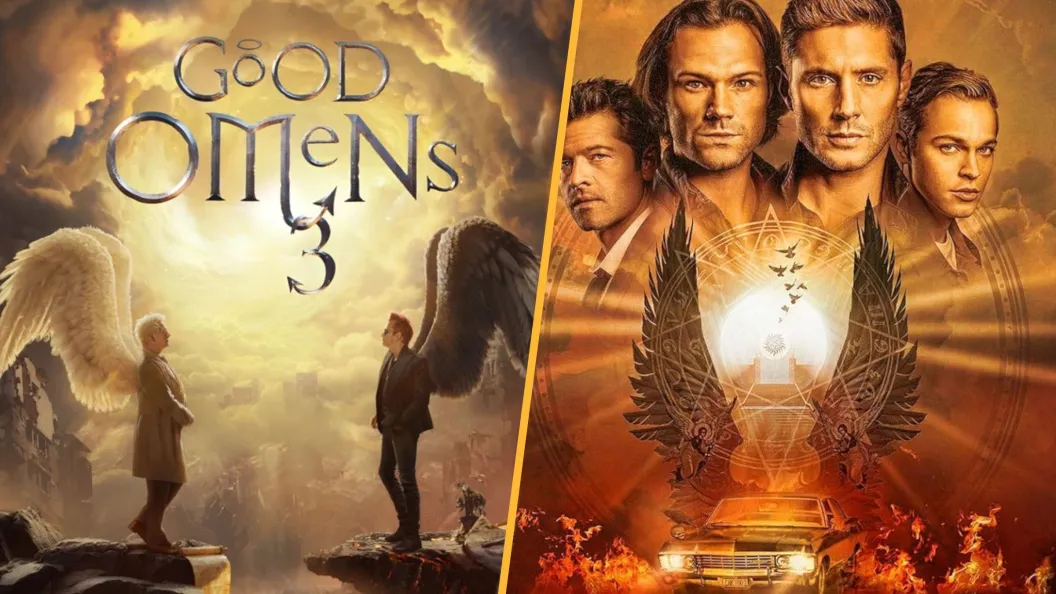
ComicBook.com has detailed how Good Omens Season 3 and Supernatural Season 15 share significant thematic and narrative parallels despite their divergent endings. The analysis, published on September 21, 2026, highlights 12 common elements between the two series' final installments, including plot mechanics, character arcs, and philosophical themes. The report emphasizes that both shows explored ideas of divine intervention, free will, and the consequences of apocalyptic beliefs, though their resolutions diverged sharply in tone and outcome.
The article notes that Supernatural Season 15 concluded with the Winchesters and their allies achieving a form of cosmic victory over God (Chuck), while Good Omens 3—a 90-minute special—ended with a bleak, divisive resolution that many fans criticized as 'disjointed' and 'needlessly bleak.' Both series, however, share a striking number of narrative devices and thematic concerns that have resonated with their audiences.
The Gambling Arc: A Shared Narrative Device
One of the most notable parallels is the gambling arc that appears in both series' endings. In Good Omens 3, Crowley, heartbroken after Aziraphale's departure to Heaven, loses his prized 1933 Bentley to a human mobster named Brian Cameron after running out of miracles. The car is later reclaimed by Aziraphale, restoring Crowley's trust and setting up their final adventure.
In Supernatural Season 15, Sam and Dean lose their divine 'plot armor' after Chuck strips them of their hero status. Struggling as ordinary humans, they seek out a bar where the Roman goddess Fortuna lets humans play pool to increase their luck. While they fail to outplay Fortuna, she restores their luck out of admiration for their heroic spirit, enabling them to continue their fight against God.
This shared narrative device—where characters lose a form of divine protection and resort to gambling or chance-based solutions—highlights the thematic overlap between the two shows.
The Book of Life and the Death Book: Opposite Roles in the Narrative
Another key parallel involves the role of books in both series' endings. In Good Omens 3, the Book of Life—a tome that contains information on every entity in the universe—becomes a destructive force when its pages are torn out by the archangel Michael. The book's destruction leads to the unraveling of reality.
In Supernatural Season 15, the Death Book—a collection of historical deaths—turns out to be blank because Chuck has not yet died. The Winchesters use it as a distraction to keep Chuck unaware of their true plan, ultimately achieving their goal without the book's intended power.
The article notes that this shared plot point takes 'completely opposite roles' in the two shows: the Book of Life actively destroys reality in Good Omens 3, while the Death Book is useless in Supernatural Season 15.
The Archangel Michael: A Shattered Character
The archangel Michael also appears in both series' endings, though his role differs significantly. In Good Omens 3, Michael steals the Book of Life and destroys it, taking his own life in the process after experiencing a mental breakdown due to years of being ignored in Heaven.
In Supernatural Season 15, Michael is described as mentally shattered after being trapped in Lucifer's Cage for years. Despite this, he initially helps the Winchesters decode the Death Book but later betrays them, revealing that he had predicted their actions.
The article highlights that both Michael's arcs reflect themes of broken trust and the consequences of divine neglect.
The Universal Destruction Scene: A Cinematic Parallel
Both shows feature a scene where reality is destroyed in a manner reminiscent of the Avengers: Endgame 'Thanos Snap.' In Good Omens 3, Michael tears pages from the Book of Life and casts them into Heaven's Eternal Flame, causing buildings and people to crumble into dust.
In Supernatural Season 15, Chuck wipes out humanity, leaving Sam and Dean to exist in an empty world. The destruction scene in both shows is described as 'virtually identical,' though Supernatural adheres to a more traditional rule that only living beings are affected.
The Final Choice: Sacrifice vs. Cosmic Rebirth
The article concludes with a comparison of the final choices made by both series' protagonists. In Good Omens 3, Aziraphale and Crowley propose a third option to God: a universe without angels, demons, or divine intervention, allowing Earth to exist for millions of years. In Supernatural Season 15, Sam and Dean offer to kill each other if Chuck restores humanity, but Chuck rejects their proposal, stating he has changed what kind of story he wants.
While both endings involve a form of sacrifice, the outcomes differ significantly. Good Omens 3 ends with a bleak, unresolved conclusion, while Supernatural Season 15 concludes with a more ambiguous but hopeful resolution.
Why the Comparison Matters
The analysis underscores how both shows explore similar philosophical questions about free will, divine intervention, and the consequences of apocalyptic events. However, the contrasting tones and outcomes highlight the challenges of translating complex themes into narrative resolutions. The shared elements suggest that Supernatural and Good Omens have been designed to resonate with audiences in similar ways, despite their distinct storytelling approaches.
The report also notes that the comparison has sparked discussions about the role of divine intervention in modern storytelling and the balance between hope and despair in narrative endings.
Entertainment news
About this breakdown
PublishedNovember 24, 2026
Last updatedNovember 24, 2026
Topics coveredComicBook.com Reports Shared Themes Between Good Omens 3 and Supernatural Season 15The Gambling Arc: A Shared Narrative DeviceThe Book of Life and the Death Book: Opposite Roles in the NarrativeThe Archangel Michael: A Shattered Character
EpisodeBreakdown may use automated tools to assist research, drafting, and formatting. Published pages are governed by our editorial and corrections policies, and source links are shown when they are available in the article record.
Discovery source: ComicBook.com. The source identifies where the topic was discovered; EpisodeBreakdown is responsible for the commentary published on this page.
Weekly editorial digest
Get the next breakdown in your inbox
Choose what you follow and receive one focused email with original anime, movie, TV, ending, timeline, and character coverage.
One email a weekNo spamCancel anytime