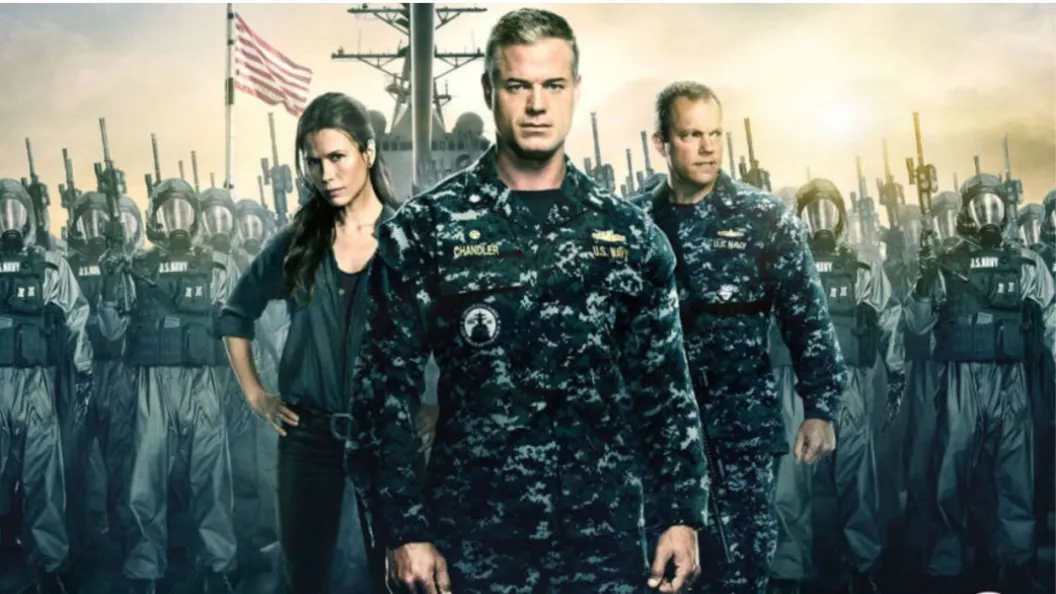
Image Courtesy of TNT Eight years after TNT ended it, The Last Ship landed on Netflix in June 2026 and climbed to number three on the US chart inside a week, which is a strange fate for a show most people filed away as a Michael Bay production about a boat.
ComicBook.com reports that The Last Ship—the Michael Bay-produced survival drama that aired on TNT from 2015 to 2023—has achieved significant cultural traction after landing on Netflix in June 2026. The show, which ran for five seasons and 56 episodes, climbed to number three on the US streaming charts within a week of its release, a remarkable feat for a series that many initially dismissed as a niche survival thriller. This resurgence has prompted a detailed analysis of five cult sci-fi shows that share The Last Ship's core themes of confined spaces, fixed crews, and urgent problem-solving under pressure.
seaQuest DSV: The Literal Match for The Last Ship
seaQuest DSV (1993–1996) is the closest match to The Last Ship in terms of premise and execution. Created by Rockne S. O'Bannon with Steven Spielberg executive producing, the series follows a submarine crew patrolling undersea colonies in a near-future Earth where land resources have been depleted. The late Roy Scheider plays Captain Nathan Bridger, a character who initially resists command but takes it seriously—a dynamic that mirrors Eric Dane’s role as the captain of The Last Ship. The first season of seaQuest DSV earned two Emmys for its music, with John Debney winning for the main title theme in 1994 and Don Davis for composition in 1995. The show’s focus on realistic science and problem-solving, rather than spectacle, aligns with The Last Ship's disciplined approach to survival storytelling.
Ascension: The Short-Burst Survival Story
Ascension (2019) is a six-episode series that offers a concise yet impactful survival narrative. Set in 1963 during the Cold War, the show follows a ship launched on a century-long voyage to another star, now stranded 51 years into the journey. Tricia Helfer delivers a standout performance as the captain’s wife, who builds authority through ceremonial roles rather than formal command. The series’ structure—designed as three two-hour blocks with a pivotal reveal in the first block—makes it a bingeable experience. Ascension streams free on Plex, Tubi, The Roku Channel, and Prime Video.
Stargate Universe: The Unstoppable Crew
Stargate Universe (2009–2011) features a crew stranded aboard an unmanned ship billions of light years from Earth, with no means of return. The series, created by Brad Wright and Robert C. Cooper, centers on the friction between military personnel and civilians as they navigate survival. Robert Carlyle’s role as the scientist who initiated the journey earned him a Best Actor Gemini Award in 2010. Despite its short run and cliffhanger ending, Stargate Universe maintained a dedicated fanbase, evidenced by a petition with over 100,000 signatures after Amazon canceled its revival in June 2026.
Falling Skies: The Grounded Alternative
Falling Skies (2011–2016) is a direct predecessor to The Last Ship in terms of narrative structure. The show follows a group of survivors navigating post-apocalyptic ruins after an alien invasion, with a focus on family dynamics and leadership. Noah Wyle and Will Patton star as a history professor and a military officer, respectively, who must maintain order amid chaos. Unlike The Last Ship, Falling Skies was not canceled but given a fifth and final season by TNT, ensuring a complete narrative arc.
Salvation: The Real-World Pressure Test
Salvation (2017–2018) presents a different kind of confined space: a government briefing room. The series follows an MIT graduate student who calculates an asteroid impact and races against time to prevent societal collapse. The show’s split reception—48% from critics versus 80% from audiences—highlights its cult appeal. Despite its cliffhanger ending, Salvation remains a compelling example of how The Last Ship’s formula applies to non-spatial settings.
Why These Shows Matter Now
The resurgence of The Last Ship on Netflix has reignited interest in its thematic siblings. Each of these shows shares The Last Ship's emphasis on realistic problem-solving within constrained environments, a rarity in the sci-fi genre. The success of The Last Ship—which has been described as 'one of the more disciplined survival dramas anyone made in the 2010s'—demonstrates the enduring appeal of stories where teams overcome logistical challenges rather than relying on explosions or spectacle. This trend aligns with broader shifts in audience preferences toward grounded, character-driven narratives over high-octane action.
The Last Ship’s Legacy
The Last Ship’s journey from a niche TNT series to a top-3 Netflix hit underscores the potential for underappreciated shows to achieve mainstream success. Its formula—fixed crews, confined spaces, and urgent deadlines—has inspired a generation of viewers to seek out similar series. As one critic noted, 'The appeal was never really the explosions, whatever the marketing suggested at the time. It was a fixed crew in a small space with a working command structure, solving one impossible logistics problem a week while a clock ran down in the background.' This insight explains why The Last Ship has become a cultural touchstone for sci-fi enthusiasts.
The Last Ship's Unexpected Netflix SuccessseaQuest DSV: The Literal Match for The Last ShipAscension: The Short-Burst Survival StoryStargate Universe: The Unstoppable Crew
EpisodeBreakdown may use automated tools to assist research, drafting, and formatting. Published pages are governed by our editorial and corrections policies, and source links are shown when they are available in the article record.
Discovery source:ComicBook.com. The source identifies where the topic was discovered; EpisodeBreakdown is responsible for the commentary published on this page.
Reader response
What did you think?
Be the first to react
Reactions and poll results are based on real reader responses. No account is required.
Continue the story
news
Captain America, Iron Man, and Thor Don’t Define the Avengers, These 5 Heroes Do
ComicBook.com reports that while Captain America, Iron Man, and Thor are often considered the core Avengers, the team’s true identity is defined by five key members who have shaped its legacy.Read next →