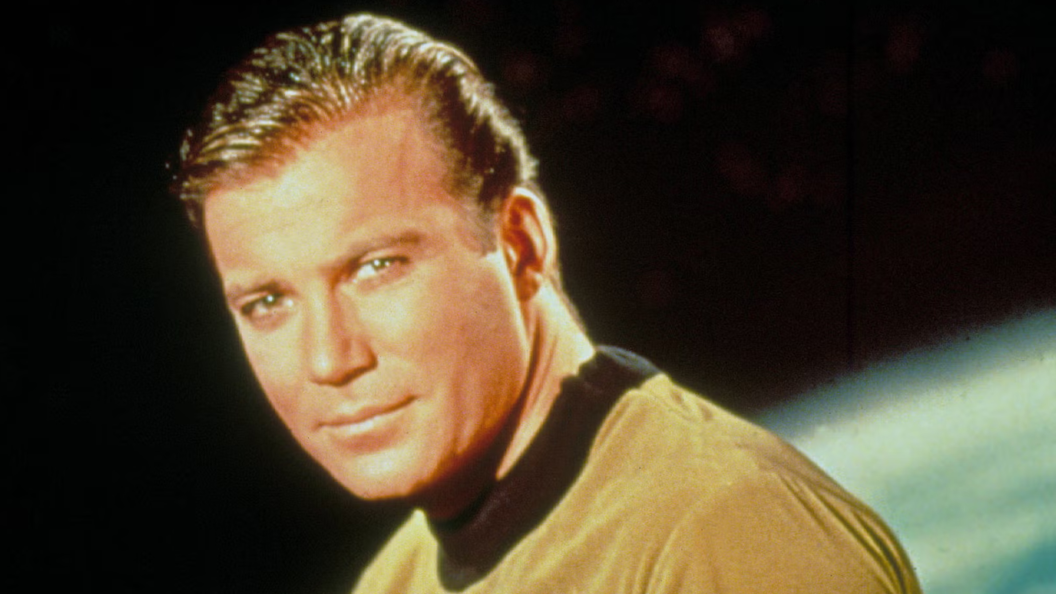
ComicBook.com reveals four original Star Trek characters who consistently made better decisions than Captain Kirk, including Montgomery Scott, Hikaru Sulu, Nyota Uhura, and Dr. Leonard 'Bones' McCoy, based on their roles in the 1960s series.
ComicBook.com has published a detailed analysis identifying four classic Star Trek characters who frequently demonstrated superior decision-making skills compared to Captain James T. Kirk in the original 1960s series. The article, released on September 18, 2026, highlights how these characters often recognized risks, ethical concerns, or practical limitations that Kirk overlooked, despite Kirk's reputation as a charismatic and brave leader.
The report attributes this analysis to ComicBook.com, a reputable source for television and comic book news. According to the publication, the original Star Trek series repeatedly placed Kirk in situations where his crew members had a better understanding of the consequences of their actions. This dynamic created a balance where Kirk's instinctive leadership was often contrasted with the more measured approaches of his team.
Montgomery 'Scotty' Scott
As the chief engineer of the USS Enterprise, Scotty possessed unparalleled expertise in the ship's systems. The article details how Scotty frequently identified practical limitations Kirk ignored, such as the Enterprise's inability to sustain extreme maneuvers. In the episode 'The Doomsday Machine,' Scotty played a critical role by restoring the USS Constellation's systems after it was severely damaged, enabling Kirk to use it as a distraction against a planet-killer. Scotty's ability to find solutions under immense pressure—like rigging the ship's impulse engines as a timed explosive—demonstrated his reliability when Kirk's confidence in his crew's capabilities led to potential failures.
Hikaru Sulu
Sulu, the helmsman of the Enterprise, provided a steady counterbalance to Kirk's more impulsive tendencies. His calm professionalism and focus on operational priorities made him essential during high-stakes scenarios. The article notes that Sulu's role as a navigator allowed him to maintain the ship's stability even when Kirk became overly invested in a mission. By the time of Star Trek VI: The Undiscovered Country, Sulu had become captain of the USS Excelsior, showcasing his leadership capabilities that Kirk himself relied on during critical moments.
Nyota Uhura
Uhura's role as the communications officer made her a vital information-gathering specialist. Her ability to interpret alien languages and navigate complex diplomatic situations often gave the crew insights Kirk missed. The article highlights her actions in Star Trek III: The Search for Spock, where she risked her safety to take control of a transporter station and ensure her crew could execute a rescue mission. Uhura's emphasis on listening and understanding—rather than dominating conversations—provided a crucial perspective during emotionally charged scenarios.
Dr. Leonard 'Bones' McCoy
McCoy's medical expertise and ethical judgment frequently challenged Kirk's decisions when they threatened human lives or moral principles. The article cites the episode 'A Private Little War,' where McCoy recognized the humanitarian consequences of Kirk's decision to introduce advanced weapons to a Klingon village. While Kirk believed there was no safe alternative, McCoy understood the devastating impact on the local population. This episode exemplifies how McCoy's perspective on ethics and practical consequences often aligned better with the crew's long-term survival than Kirk's strategic focus.
The report emphasizes that Kirk's leadership was not without flaws, and the original series' strength lay in its balance between Kirk's boldness and his crew's critical insights. ComicBook.com notes that the series even spawned a Star Trek toyline in the 1970s that became a cultural phenomenon, underscoring the enduring impact of these character dynamics.
This analysis does not claim any character was 'perfect'—McCoy, for instance, could be emotional or stubborn—but the report stresses that in critical decision-making contexts, these characters consistently provided a more balanced perspective than Kirk alone. The article concludes by highlighting the importance of having a team that can challenge leadership without undermining the captain's role, a principle that remains relevant in both Star Trek's fictional universe and real-world leadership dynamics.
EpisodeBreakdown may use automated tools to assist research, drafting, and formatting. Published pages are governed by our editorial and corrections policies, and source links are shown when they are available in the article record.
Discovery source:ComicBook.com. The source identifies where the topic was discovered; EpisodeBreakdown is responsible for the commentary published on this page.
Reader response
What did you think?
Be the first to react
Reactions and poll results are based on real reader responses. No account is required.
Continue the story
news
Captain America, Iron Man, and Thor Don’t Define the Avengers, These 5 Heroes Do
ComicBook.com reports that while Captain America, Iron Man, and Thor are often considered the core Avengers, the team’s true identity is defined by five key members who have shaped its legacy.Read next →