ComicBook.com's review finds Control Resonant's combat mechanics and narrative fall short of Remedy Entertainment's previous standards, with repetitive combat and underdeveloped story themes.
Control Resonant Review: Remedy's Melee Action Fails to Match Its Signature Strengths
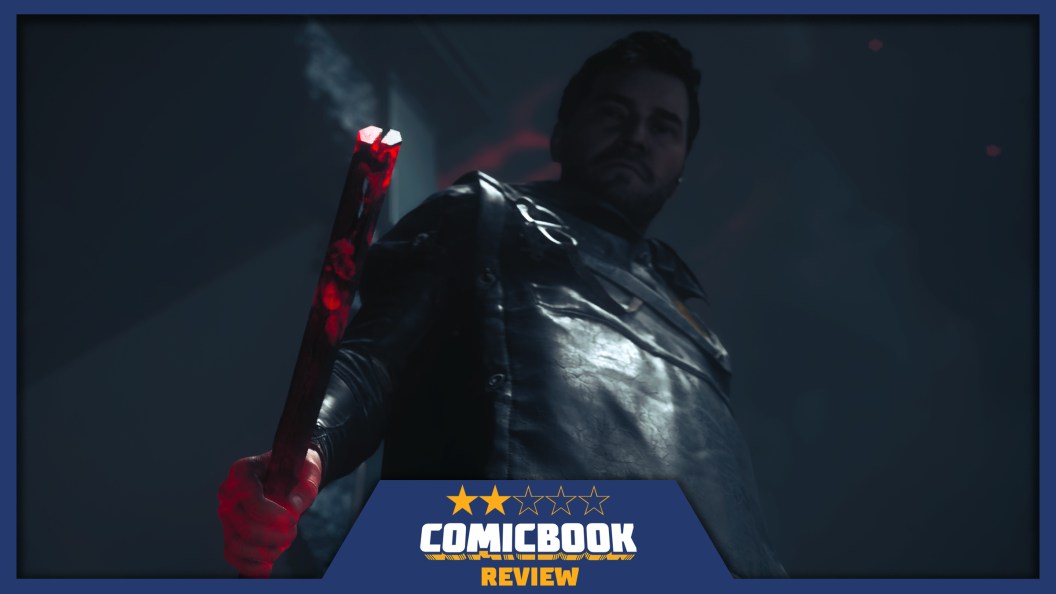
ComicBook.com has published a detailed review of Remedy Entertainment's latest game, Control Resonant, finding its melee combat mechanics and narrative to be significantly weaker than the studio's 2019 title Control. The review, authored by Gaming Features Writer Michael Leri, critiques the game's combat system as 'mindless, repetitive, and poorly balanced' while noting its story lacks depth and fails to leverage Remedy's narrative strengths.
The review highlights that Control Resonant features a combat system where players control Dylan Faden, Jesse's tortured brother from the first game. Dylan moves swiftly with a dodge that covers significant ground and includes 'precious invulnerability frames.' However, the review states that 'just about every weapon has only one attack string,' and players cannot switch armaments mid-combo. This limitation, the review argues, 'dramatically shrinks the possibility space' for creative combat sequences.
The review also points out that the game's health values are 'inflated,' with opponents having 'outrageously large health pools' that can take 'multiple minutes of sustained hacking' to defeat. This, combined with the repetitive nature of Dylan's combat, results in a 'war of attrition' where players are encouraged to adjust accessibility settings to avoid game crashes.
Combat Mechanics: A Shallow Experience
The review identifies Control Resonant's combat as 'sauceless'—a term used to describe a lack of depth or creativity. Unlike the Devil May Cry, God of War, and Bayonetta franchises, which are known for their 'sandbox' combat systems, Control Resonant offers a limited set of moves that players must repeat. The review states that 'it's all just mashing, mashing, mashing,' with no meaningful variation in combat strategies.
New powers in the game, such as the ability to coat the Aberrant weapon with fire, are described as 'status effects' that 'don't interact with each other.' The review notes that even the game's 'surprisingly lengthy upgrade tree' provides minimal improvements to combat, adding 'stat bonuses that are too miniscule to notice.'
Narrative Depth: A Missed Opportunity
Remedy Entertainment is renowned for its narrative storytelling, but Control Resonant falls short in this area as well. The review states that Dylan's quest to save Jesse and stop the Hiss forces lacks 'inventive concepts that stretch the mind' and ends with an 'unearned ending.'
The game's lore, which includes 'SCP-adjacent' elements, is described as 'tame in comparison' to Remedy's previous work. The review notes that while some of the game's M.C. Escher-esque cityscapes are visually stunning, they 'don't come close to matching the impressive heights seen in the first Control.'
Why This Matters for Remedy Entertainment
The review concludes that Control Resonant 'betrayed the very notion of what it means to be a Remedy game.' The game's failure to deliver on its combat and narrative promises raises questions about Remedy's ability to maintain its quality standards in future projects. The review emphasizes that the game's issues are not due to poor controls but rather a fundamental lack of creativity and balance.
The review also notes that a PS5 copy of Control Resonant was provided by the publisher for the purpose of this review, highlighting the game's accessibility to players who wish to experience it firsthand.
The Broader Context of Remedy's Game Development
For Remedy Entertainment, Control Resonant represents a significant departure from their previous work. The studio has long been known for its high-quality action games, but Control Resonant appears to be a misstep that could impact their reputation in the gaming industry. The review suggests that the game's issues may stem from a lack of focus on player experience and creative storytelling, rather than technical shortcomings.
The review also notes that Remedy's 'Lynchian style of storytelling'—which typically avoids comprehensive explanations—has not been effective in Control Resonant. The game's narrative elements are described as 'haphazard' and 'inscrutable,' failing to engage players on a deeper level.
What Players Can Expect Moving Forward
While the review does not speculate on future projects, it emphasizes that Control Resonant serves as a cautionary tale for Remedy Entertainment. The game's shortcomings highlight the importance of balancing creative storytelling with technical execution in action games. The review concludes that Control Resonant is 'not just a disappointing sequel; it betrays the very notion of what it means to be a Remedy game.'
Combat Mechanics: A Shallow ExperienceNarrative Depth: A Missed OpportunityWhy This Matters for Remedy EntertainmentThe Broader Context of Remedy's Game Development
EpisodeBreakdown may use automated tools to assist research, drafting, and formatting. Published pages are governed by our editorial and corrections policies, and source links are shown when they are available in the article record.
Discovery source:ComicBook.com. The source identifies where the topic was discovered; EpisodeBreakdown is responsible for the commentary published on this page.
Reader response
What did you think?
Be the first to react
Reactions and poll results are based on real reader responses. No account is required.
Continue the story
news
Captain America, Iron Man, and Thor Don’t Define the Avengers, These 5 Heroes Do
ComicBook.com reports that while Captain America, Iron Man, and Thor are often considered the core Avengers, the team’s true identity is defined by five key members who have shaped its legacy.Read next →