DC Comics created the Anti-Monitor as the ultimate villain for Crisis on Infinite Earths, but overexposure and misplacement in later stories have diminished his legend.
DC Comics Created the Anti-Monitor as the Ultimate Villain for Crisis on Infinite Earths
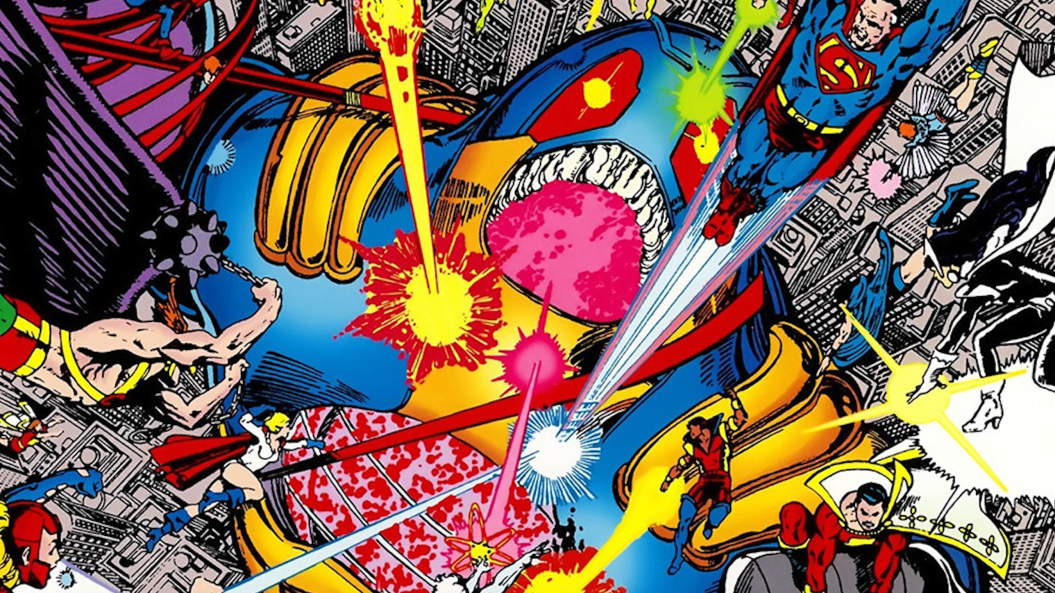
ComicBook.com reports that DC Comics designed the Anti-Monitor as the definitive supervillain for its landmark 1985 event series Crisis on Infinite Earths. The character was conceived to serve as the ultimate threat in a multiverse-ending story, embodying the concept of an all-powerful, anti-matter entity that sought to destroy positive matter universes. Writer Marv Wolfman and artist George Perez crafted the Anti-Monitor as a force of destruction unlike any other, with the character’s simplicity—described as 'brevity is the soul of wit'—proving effective for the story’s narrative demands.
The Anti-Monitor’s role in Crisis on Infinite Earths was pivotal. He was positioned as the final boss of the multiverse, capable of defeating heroes like Superman with his bare hands. His legend grew from the story’s impact, with readers and creators alike considering him the ultimate villain in DC Comics history. The character’s brief but impactful presence in the series—spanning 11 issues—cemented his status as a one-time, all-conquering threat.
The Anti-Monitor’s Legacy Was Built on a Perfect Storm
The Anti-Monitor’s mythos was designed to be self-sustaining. After Crisis, he was largely forgotten until DC Comics revived him for The New 52 reboot in 2011. His return was initially limited to background roles in stories like The Sinestro Corps War, but his prominence surged when he became a central antagonist in the New 52’s Infinite Frontier storyline.
This resurgence, however, exposed the Anti-Monitor’s weaknesses. His original narrative framework—being the 'evil anti-matter version of the Monitor' who hated his brother—was simplified to the point of being almost unrecognizable in later stories. The introduction of Perpetua, his daughter, further demystified his mythos, reducing him from a near-mythical figure to a conventional supervillain.
Overexposure and Misplacement Diminished the Anti-Monitor’s Impact
DC Comics’ repeated use of the Anti-Monitor outside the context of Crisis led to a decline in his significance. The character was intended to be a one-time villain, but his appearances in subsequent storylines—such as Infinite Frontier and The New 52—diluted his impact. The Anti-Monitor’s legend was built on his near-undefeated status in Crisis, but his later roles as a recurring antagonist failed to replicate that intensity.
The Anti-Monitor’s story illustrates a broader trend in superhero comics: the tension between nostalgia and innovation. While DC Comics initially leveraged the character’s uniqueness to create a landmark event, the character’s overexposure and misplacement in later narratives have resulted in a diminished legacy.
Why the Anti-Monitor Matters Today
The Anti-Monitor’s history remains relevant for fans and creators alike. His creation marked a turning point in DC Comics’ approach to supervillains, shifting the focus from traditional antagonists to multiverse-level threats. However, his current status as a 'recurring event villain' highlights the challenges of maintaining character relevance in a franchise that thrives on nostalgia.
For DC Comics, the Anti-Monitor serves as a cautionary tale about the balance between innovation and consistency. While the character’s original design was groundbreaking, his repeated use in later stories has led to a narrative that no longer resonates with the same intensity as Crisis.
The Anti-Monitor’s Future in DC Comics
DC Comics has not announced any new projects involving the Anti-Monitor. The character’s current role in the DC Universe is limited to background appearances, with no major storylines planned. This lack of new material has further cemented the Anti-Monitor’s status as a 'recurring event villain' rather than a central threat.
The Anti-Monitor’s story underscores a key lesson in comic book storytelling: the importance of context. A character’s impact is not determined by their power level alone but by how they are integrated into the narrative. For DC Comics, the Anti-Monitor’s legacy remains a testament to the creative risks and rewards of building a villain from scratch.
DC Comics Created the Anti-Monitor as the Ultimate Villain for Crisis on Infinite EarthsThe Anti-Monitor’s Legacy Was Built on a Perfect StormOverexposure and Misplacement Diminished the Anti-Monitor’s ImpactWhy the Anti-Monitor Matters Today
EpisodeBreakdown may use automated tools to assist research, drafting, and formatting. Published pages are governed by our editorial and corrections policies, and source links are shown when they are available in the article record.
Discovery source:ComicBook.com. The source identifies where the topic was discovered; EpisodeBreakdown is responsible for the commentary published on this page.
Reader response
What did you think?
Be the first to react
Reactions and poll results are based on real reader responses. No account is required.
Continue the story
news
Spider-Man: Brand New Day Originally Had Peter Use Ben Reilly Name in Early Script
Spider-Man: Brand New Day co-writer Chris McKenna revealed that early script drafts had Peter Parker using the Ben Reilly pseudonym, which would have conflicted with the MCU's Spider-Noir series. The move was likely scrapped to avoid confusion with Nicolas Cage's character.Read next →