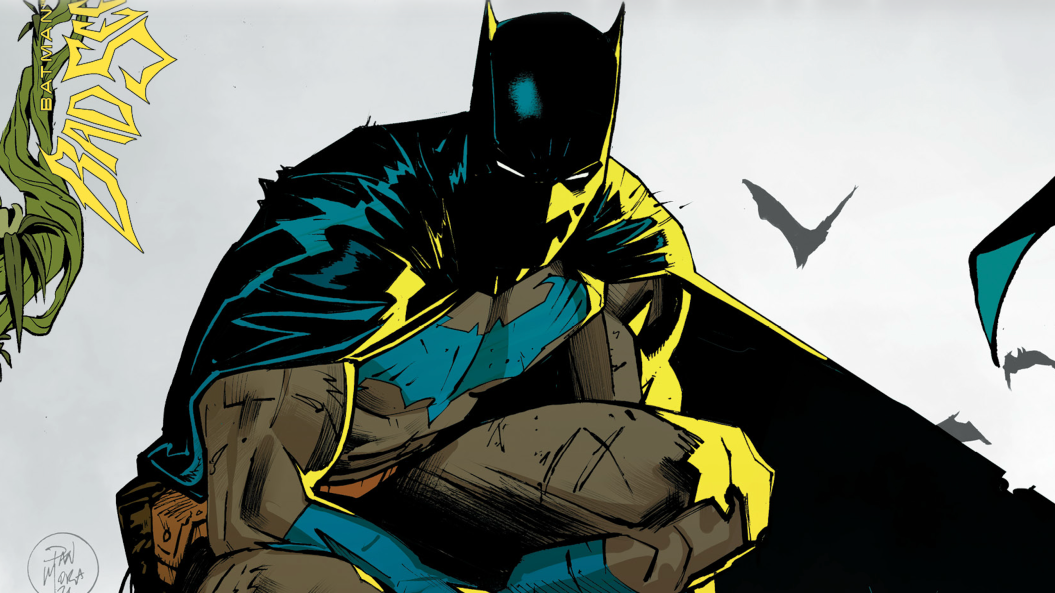
DC Comics has officially debuted a fan-made villain, Rhetoric, created by Sharif Robbins-Brinson, who won the 'Building Bad' sweepstakes with his concept. The character debuts in Detective Comics #1113 and is designed as a critique of Gotham’s legal system and Batman’s rehabilitation efforts.
DC Comics Debuts Fan-Made Villain Rhetoric in Detective Comics #1113
DC Comics has officially introduced Rhetoric, a villain created by fan Sharif Robbins-Brinson, who won the 'Building Bad' sweepstakes contest with his concept. The character debuts in Detective Comics #1113 and is designed as a critique of Gotham’s legal system and Batman’s rehabilitation efforts.
The announcement comes from ComicBook.com, which reports that Rhetoric was selected as the winner of DC’s partnership with LEGO Batman’s 'Building Bad' sweepstakes. This contest allowed fans to collaborate with DC Comics to design a new Batman villain, with the winner’s concept debuting in Detective Comics #1113, appearing in Batman #14, and making a DLC cameo in the LEGO Batman: Legacy of the Dark Knight video game.
Rhetoric’s Origin and Design
Rhetoric was once a regular thug for the Penguin who unlocked his latent telekinetic metahuman ability either through Batman striking him in the head or excessive electric shock therapy in Arkham Asylum. The character’s design reflects his background: a costume made from Arkham and Blackgate inmate and guard uniforms, along with handcuffs, chains, and a Waynetech security staff gun.
The villain’s motivation centers on his belief that Gotham’s legal system perpetuates a cycle of crime and incarceration that disproportionately affects impoverished communities. Rhetoric has broken into and destroyed files related to his past at Wayne Foundation Charities, indicating he has been through Bruce Wayne’s rehabilitation programs and mental halfway house projects.
Rhetoric as a Social Commentary
Unlike traditional Batman villains, Rhetoric represents a morally nuanced critique of systemic issues. He believes Batman’s efforts to clean up Gotham’s corruption are part of a flawed system that fails to address the root causes of crime. Rhetoric’s mission is to dismantle the cycle of crime and imprisonment that targets marginalized communities, arguing that the current legal framework is inherently corrupt.
The character’s narrative potential lies in his ability to challenge Batman’s mission and the effectiveness of Bruce Wayne’s charity work. Rhetoric’s existence highlights the tension between Batman’s crusade for justice and the systemic issues that perpetuate crime in Gotham.
DC’s History of Anti-Batman Villains
DC Comics has previously created anti-Batman characters like Owlman and the Batman Who Laughs, but these villains often lack depth. Owlman and the Batman Who Laughs are typically portrayed as nihilistic alternate versions of Batman, while others like Prometheus and Wrath target law enforcement without addressing systemic issues.
Rhetoric stands out as the first character to directly critique the legal system’s role in perpetuating crime. His concept addresses real-world issues such as systemic oppression and the cycle of incarceration, making him a more socially relevant villain than previous iterations.
Why This Matters for Batman’s Story
Rhetoric’s introduction marks a shift in DC’s approach to villain design. By focusing on systemic issues rather than individual villainy, Rhetoric offers a narrative framework for exploring how Batman’s mission might inadvertently reinforce the very problems he seeks to solve.
The character’s debut in Detective Comics #1113 has already sparked discussions among fans about the implications of Batman’s rehabilitation efforts and the legal system’s role in Gotham. Rhetoric’s potential to challenge Batman’s worldview could lead to deeper storytelling about systemic inequality and criminal justice reform.
[New Look at The Batman Part II Released and DC Fans Are All Saying the Same Thing]
[Clayface Video Reveals New Transformation Scenes & Teases the Villain’s Final Form]
DC Comics Debuts Fan-Made Villain Rhetoric in Detective Comics #1113Rhetoric’s Origin and DesignRhetoric as a Social CommentaryDC’s History of Anti-Batman Villains
EpisodeBreakdown may use automated tools to assist research, drafting, and formatting. Published pages are governed by our editorial and corrections policies, and source links are shown when they are available in the article record.
Discovery source:ComicBook.com. The source identifies where the topic was discovered; EpisodeBreakdown is responsible for the commentary published on this page.
Reader response
What did you think?
Be the first to react
Reactions and poll results are based on real reader responses. No account is required.
Continue the story
news
Captain America, Iron Man, and Thor Don’t Define the Avengers, These 5 Heroes Do
ComicBook.com reports that while Captain America, Iron Man, and Thor are often considered the core Avengers, the team’s true identity is defined by five key members who have shaped its legacy.Read next →