movies
Spider Man
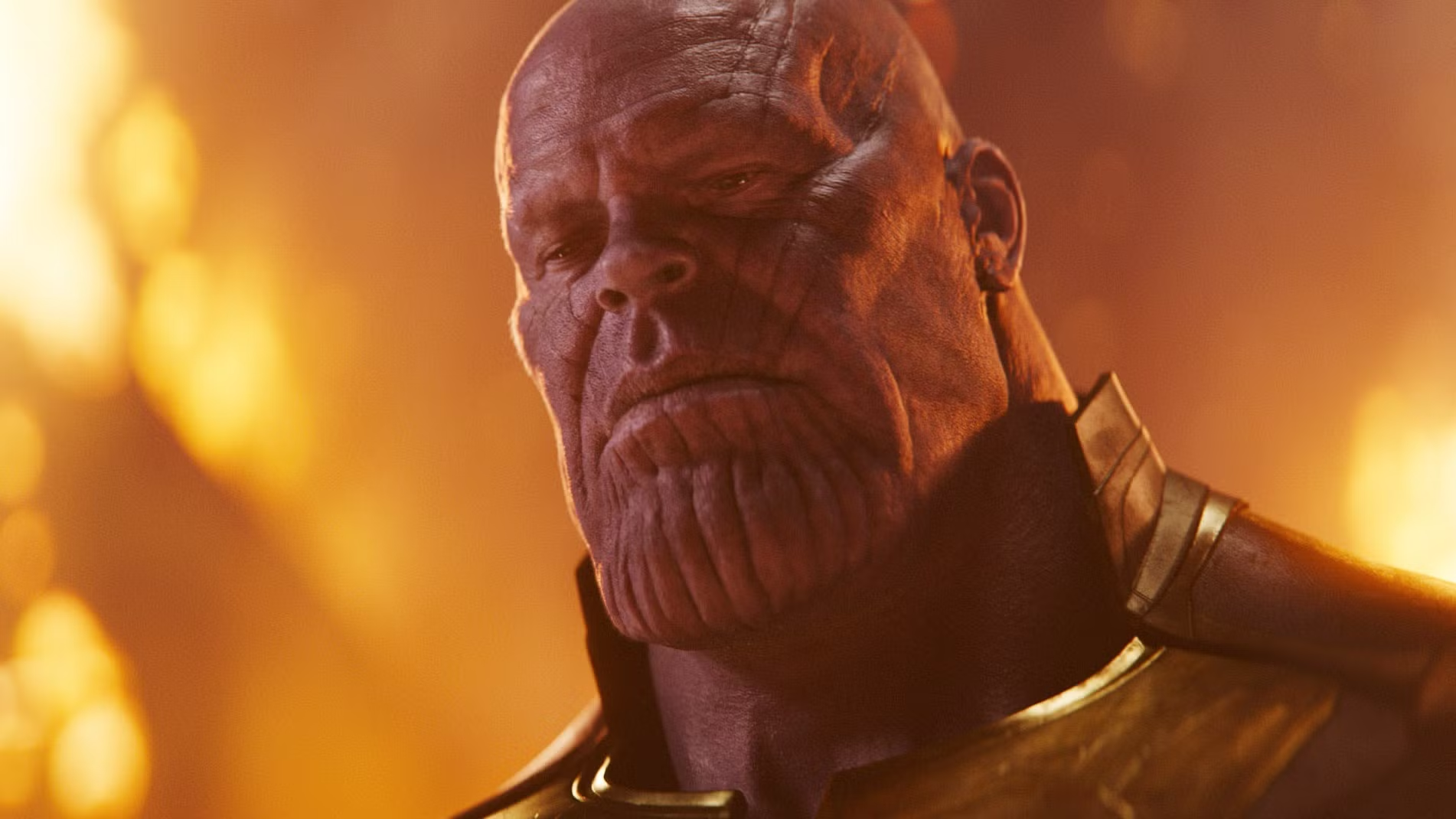
Exploring the impact of Thanos as the protagonist in 'Avengers: Infinity War'—a choice that redefined the MCU.
Explore the franchise
In the realm of superhero cinema, few decisions have been as pivotal as Marvel Studios' choice to center its epic film, Avengers: Infinity War, around Thanos, the Mad Titan. Released in 2018, this bold narrative direction not only set the film apart from its predecessors but also transformed the entire Marvel Cinematic Universe (MCU) in ways that continue to resonate with audiences today.
Traditionally, superhero films have focused on the heroes, showcasing their journeys and battles against villains. However, Infinity War flipped this narrative on its head by presenting Thanos not just as a villain, but as the film's central character. His motivations—rooted in a twisted sense of balance and justice—added depth to his character and invited viewers to understand his perspective, even if they did not agree with his methods.
This choice was not merely a narrative gimmick; it was a calculated risk. By making Thanos the protagonist, the filmmakers were able to explore complex themes of power, sacrifice, and morality. This depth made the film's stakes feel incredibly real, as audiences were forced to grapple with the implications of Thanos's quest for the Infinity Stones.
The repercussions of this decision extended beyond Infinity War. It set a new standard for character development within the MCU. Previous films had laid the groundwork for Thanos's character through subtle hints and appearances, but Infinity War took those threads and wove them into a rich tapestry of storytelling. The film's success demonstrated that audiences were ready for more nuanced storytelling that challenged the traditional hero-villain dichotomy.
Moreover, Thanos's portrayal reshaped the approach to future villains in the MCU. Characters like Kang the Conqueror are now being developed with a similar depth, reflecting a shift in how stories are crafted within this expansive universe.
Upon its release, Avengers: Infinity War received widespread acclaim for its ambitious storytelling and character arcs. Critics hailed it as a high point for the MCU, praising the emotional weight carried by the characters, especially the moments that showcased the consequences of Thanos's actions. The film's climax, where heroes faced unimaginable losses, resonated with audiences, leaving a lasting impact that is still discussed today.
In many ways, the decision to focus on Thanos allowed the film to explore themes of loss and sacrifice in ways that previous entries had only hinted at. The emotional gravity of the film set it apart, making it not just an action blockbuster but a poignant commentary on the nature of heroism and villainy.
Looking ahead, the bold choice to make Thanos a central figure in Infinity War has paved the way for future narratives within the MCU. As Marvel continues to expand its universe, the emphasis on complex characters—whether they are heroes or villains—will likely remain a focal point. This approach will not only enrich the storytelling but also deepen audience engagement, enabling viewers to connect with characters on a more profound level.
As Marvel fans eagerly anticipate upcoming films and series, the legacy of Avengers: Infinity War serves as a reminder of the power of bold storytelling choices. The film's success demonstrated that audiences are ready for narratives that challenge conventions, providing a richer cinematic experience.
Eight years later, the decision to make Thanos the protagonist of Avengers: Infinity War stands as one of the MCU's most audacious and rewarding choices. It has redefined what superhero films can achieve, opening the door for more complex narratives and character explorations. As Marvel continues to evolve, fans can look forward to stories that delve deeper into the motivations and consequences of both heroes and villains alike.
In the end, Infinity War is not just a tale of good versus evil; it’s a nuanced exploration of the human condition, making it a landmark film in cinematic history.
Movie explanation
EpisodeBreakdown may use automated tools to assist research, drafting, and formatting. Published pages are governed by our editorial and corrections policies, and source links are shown when they are available in the article record.
Discovery source: ScreenRant. The source identifies where the topic was discovered; EpisodeBreakdown is responsible for the commentary published on this page.
Reader response
Reactions and poll results are based on real reader responses. No account is required.
Tom Holland expressed his discontent with an early cut of 'Spider-Man: Brand New Day,' saying, 'It totally didn't work.'