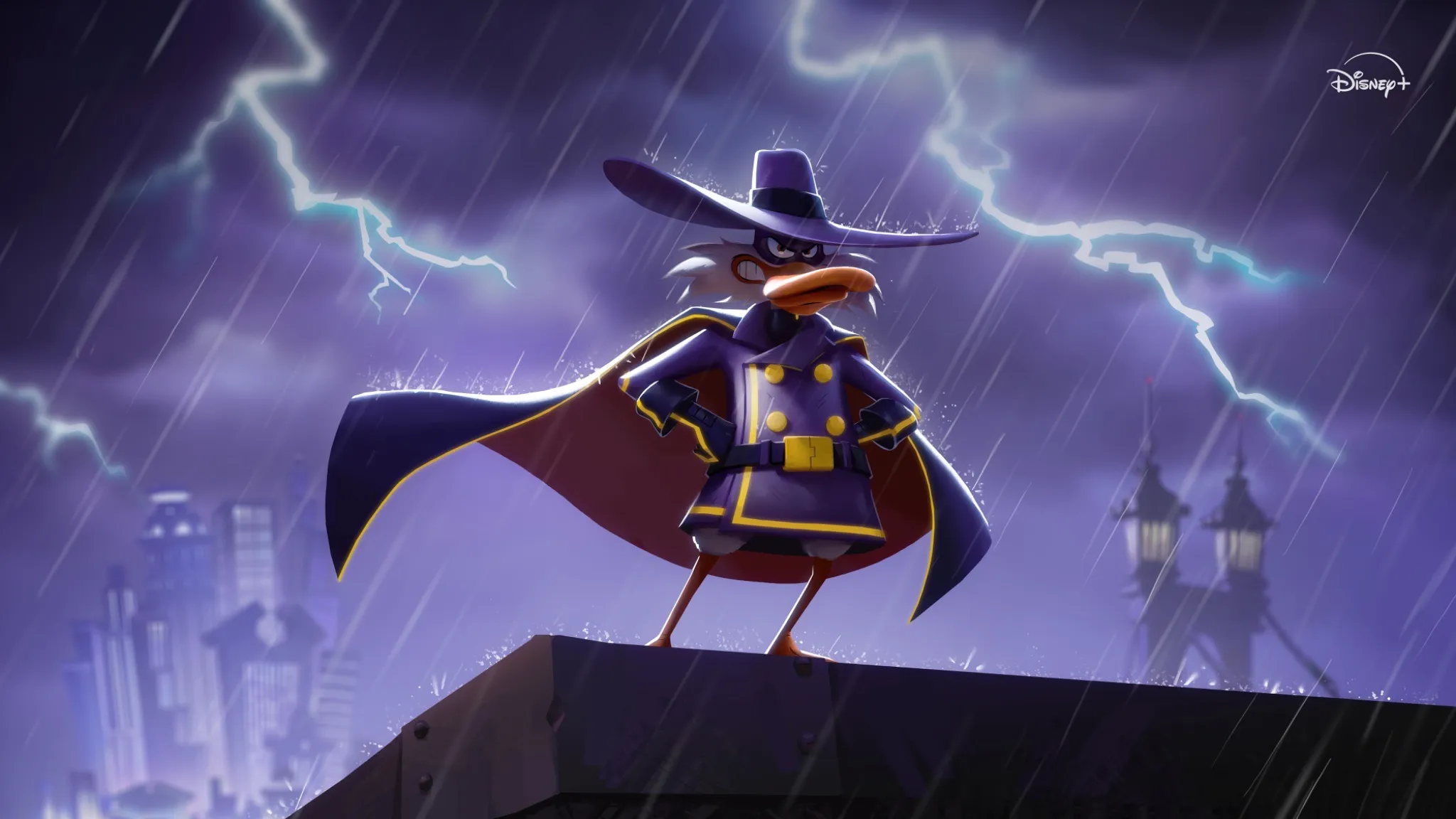
‘Darkwing Duck’ Reboot Ordered to Series at Disney+
Disney+ has officially ordered a reboot of ‘Darkwing Duck’ to series, featuring a star-studded voice cast, including Mark Hamill and Seth Rogen.
From the early stages of developing Star Trek, producers were concerned about the believability of the alien races the Enterprise would encounter.

At the core of the Star Trek franchise's appeal is its ability to blend imaginative storytelling with relatable characters. A significant reason most alien races appear humanoid stems from both budgetary constraints and an emphasis on believability. Gene Roddenberry, the creator of Star Trek, introduced the concept of "Class M" planets in his original pitch in March 1964. These planets are designed to support life similar to Earth's, justifying why the series predominantly features humanoid characters.
Roddenberry's vision was formally articulated as the USS Enterprise traveled to worlds that resemble Earth in terms of environment and life. This made it easier for audiences to connect with the characters and narratives presented, as viewers were invited to explore elements rooted in familiar human experiences. The early premise was not only a storytelling device but also a practical strategy to reduce the resources needed for extravagant alien designs, which would otherwise require costly production efforts, especially regarding special effects and costumes.
Building on Roddenberry’s foundation, producer Robert Justman outlined additional parameters for Starfleet's mission in an April 1966 memo. He emphasized a focus on exploring planets that could feasibly support humanoid life. According to Justman, this facilitated coherent storytelling by reducing variables that could hinder plot development. This strategic direction aimed to enhance the imaginative scope of the series while firmly grounding its premise in recognizable science.
In the book "Inside Star Trek: The Real Story," Justman explained, "Our Earth scientists at the time of our stories have plotted out certain areas within the galaxies which they say are likely to have ... a chance of supporting life, as we know it." This formulation was crucial for not just storytelling cohesiveness but also for creating memorable moments that resonate with audiences.
Humanoid designs were also a significant advantage from a production standpoint. As Justman noted, concerns about needing bulky spacesuits for inhospitable environments could drastically complicate filming. By focusing on similar-looking alien species, Star Trek avoided the challenges posed by designing entirely new life forms that might require intricate special effects. The resulting approach effectively established a framework within which creativity could thrive without overwhelming production capabilities.
The decision to present primarily humanoid alien races in Star Trek played an important role in forging an emotional connection between characters and the viewers. By constructing relatable characters, the series has maintained its impactful storytelling through generations of fans. Understanding this context enriches the viewing experience, providing insight into the thoughtful processes behind the franchise's creation. It highlights the elegant solution Roddenberry and Justman devised to ensure that engagement with the Star Trek universe remains accessible while still expanding its imaginative horizons.
The artistic and practical choices made during the early development of Star Trek have had long-lasting implications for its storytelling and character design. As new installments of the franchise continue to emerge, recognizing the origins of these decisions underscores the importance of marrying creativity with practical constraints. This allows fans to appreciate the ingenuity behind one of television's most beloved sci-fi franchises and deepens the understanding of the universe in which its stories unfold.
Entertainment news
EpisodeBreakdown may use automated tools to assist research, drafting, and formatting. Published pages are governed by our editorial and corrections policies, and source links are shown when they are available in the article record.
Discovery source: TVLine. The source identifies where the topic was discovered; EpisodeBreakdown is responsible for the commentary published on this page.
Reader response
Reactions and poll results are based on real reader responses. No account is required.