Analyzing Jason Momoa's Role as Blanka in Street Fighter
Dive into Jason Momoa's portrayal of Blanka in the new Street Fighter, exploring themes, character dynamics, and significant scenes.
Exploring the divide over Nolan's adaptation of 'The Odyssey' amid expert debates and creative interpretations.
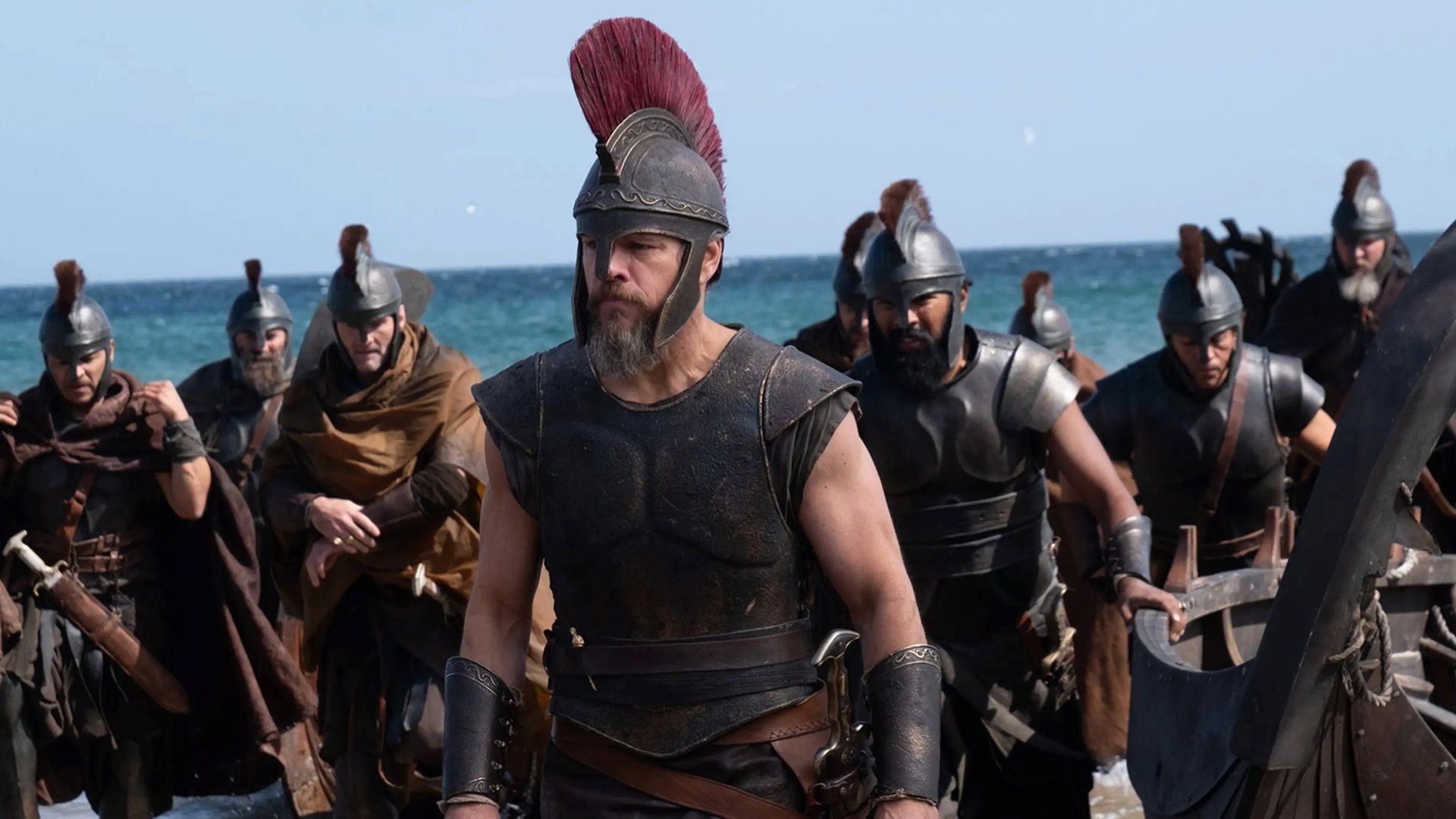
In simple terms, Christopher Nolan's adaptation of 'The Odyssey' has ignited a significant discourse among literary and cinematic experts. The film poses a central question: How should a timeless classic be reimagined for modern audiences? While Nolan's work has garnered praise for its visual storytelling and ambitious scope, it also faces fierce criticism, particularly from respected classicist and translator Emily Wilson. Wilson's review has sparked a vigorous defense from novelist Joyce Carol Oates, adding multiple layers to the conversation about adaptation and interpretation.
What we know is that 'The Odyssey' has not only been praised for its ambition but also scrutinized for its choices. Critics have raised concerns about everything from casting decisions to dialogue authenticity. At the center of the storm is Wilson, who claims that Nolan's retelling lacks the complexities that make Homer's original narrative resonant. Her review for the London Review of Books is severe, but it corresponds to ongoing debates about literary adaptation. With multiple interpretations of 'The Odyssey' existing already, this film throws those differing views into sharp relief.
Oates’s defense with its candid tone argues that Wilson's critique reflects a closed-mindedness towards differing interpretations. She insists that every translation is a subjective rendering, urging critics to be more empathetic towards artistic visions different from their own. Both writers emphasize that the reimagining of a classical hero is a multifaceted endeavor fraught with challenges.
One of the most compelling aspects of Oates's commentary is her reflection on the dual pressures Nolan faced during the adaptation process. This creative dilemma is likened to navigating between Scylla and Charybdis, where making the story too modern could risk alienating purists, while a literal adherence to the original text could render it inaccessible. This tension illustrates the fine line filmmakers must walk when presenting well-known narratives. Such themes remind us of previous adaptations of mythic tales, including the acclaimed 1997 miniseries co-produced by Francis Coppola, which also had to balance traditional elements with modern sensibilities.
At the core of Wilson's critique is her view on Matt Damon's portrayal of Odysseus. Known for its psychological depth, Nolan’s Odysseus is depicted as visibly traumatized and guilt-ridden, diverging from Wilson's interpretation presented in her celebrated translation, which urges readers to understand Odysseus as a 'complicated man.' This divergence highlights the broader discussion about character portrayal in adaptations. Nolan's approach contends with the notion that to truly capture a character's essence, one may need to dramatize their internal struggles, a choice that some audiences have found effective while others have viewed as simplification.
The debates surrounding Nolan’s adaptation touch on key interpretive themes central to adaptations of classic texts. Each interpretation of 'The Odyssey' immerses itself in cultural context, rendering it a living artifact rather than a static story. As such, Oates emphasizes the richness of reinterpreting classical heroes through diverse lenses. Given that this is not the first adaptation of this timeless tale—from ancient productions to modern ones—the weight of expectation can often overshadow individual creative choices.
Nolan’s film has achieved commercial success and critical acclaim in many circles; however, it's met with considerable backlash from a specific scholarly segment. Hyperbolic commentary like Wilson's can easily resonate in critical spaces where scholarly rigor clashes with artistic interpretation. This divide has the potential to alienate casual viewers who might simply be looking for an engaging experience rather than a faithful homage to a classic. Therefore, audience reactions can slot into various categories, raising the question: what is the role of fidelity in adaptations while still appealing to contemporary viewers?
This ongoing debate highlights that there is no definitive version of 'The Odyssey,' particularly as new media evolve. Even Oates acknowledges that while she doesn't deem Nolan's film a classic, it represents a step towards a multifaceted dialogue on classical adaptations. In environments where varying interpretations can exist side by side, audiences are encouraged to engage with adaptations that reflect both modern and traditional themes.
As this discourse continues, it underscores the importance of openness in evaluating artistic interpretations, reminding us that adaptations serve as mirrors, reflecting the complexities of their times. The ability to appreciate differing viewpoints, as emphasized by both Wilson and Oates, may be the ultimate takeaway from the discussions incited by Nolan's epic retelling. Engaging with these perspectives might allow future adaptations to navigate the complexities of interpretation and audience reception without losing the narrative’s core.
In light of these arguments, it becomes clear that filmmaking, much like translation, is an interpretive art. As spectators, our task is not only to watch but also to engage critically with the adaptations that reshape these foundational narratives.
As the controversy surrounding Nolan’s adaptation of 'The Odyssey' continues to unfold, expect further dialogue from both supporters and detractors of this retelling. Educational institutions may utilize this discussion in classrooms to foster critical thinking about adaptations, inviting students and audiences to discern what elements of a classic are essential, and which components might lend themselves to reinterpretation. Meanwhile, the entertainment industry might become more cognizant of the dichotomy between original narratives and their reinterpretations as filmmakers grapple with the Scylla and Charybdis of modern storytelling.
Connecting this ongoing dialogue to related works and adaptations, the film raises questions about fidelity, originality, and respect for source material, a theme beautifully explored by the likes of Adaptation's literary debates. Up next, we can look at how Nolan might continue to evolve as a filmmaker within this landscape of heightened critical scrutiny.
For those curious about the nuances of decay and transformation in other retellings of classic texts, consider exploring adaptations such as Assassin's Creed Odyssey Sees Player Surge After Nolan's The Odyssey and Christopher Nolan's Daughter Had A Crucial Hidden Role In The Odyssey.
Movie explanation
EpisodeBreakdown may use automated tools to assist research, drafting, and formatting. Published pages are governed by our editorial and corrections policies, and source links are shown when they are available in the article record.
Discovery source: MovieWeb. The source identifies where the topic was discovered; EpisodeBreakdown is responsible for the commentary published on this page.
Reader response
Reactions and poll results are based on real reader responses. No account is required.