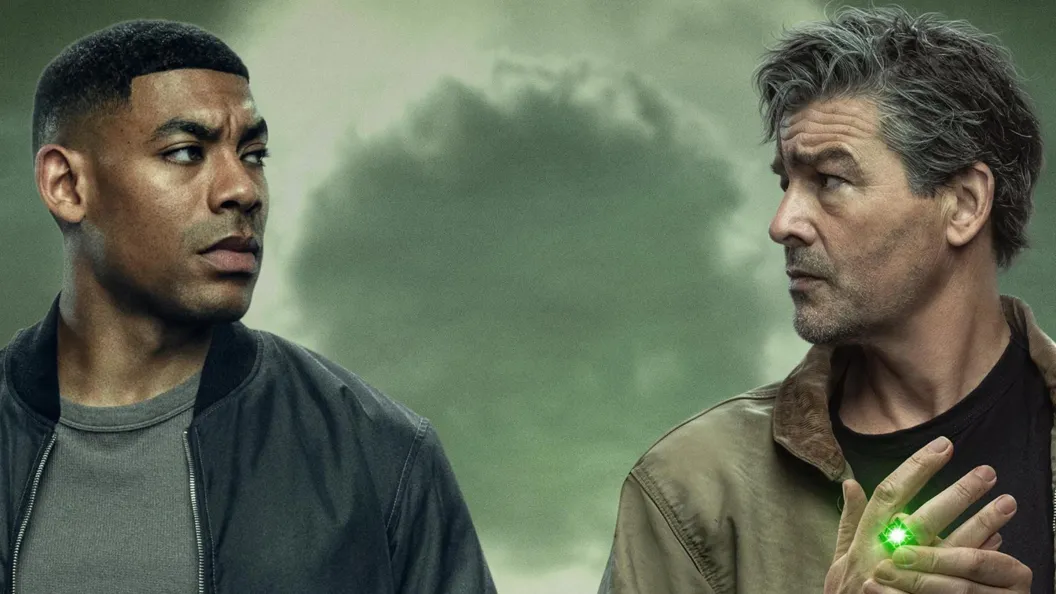
HBO’s Lanterns Reveals New Villain Possibilities After Zoe Macon’s Death
ComicBook.com reports that HBO’s Lanterns has introduced multiple potential villains for its season-long narrative, following the death of Zoe Macon in episode 5. The show has maintained a deliberate ambiguity around its central antagonist, with the series now shifting focus from Zoe—a confirmed Manhunter—to a constellation of morally complex figures including Sinestro, the Guardians of the Universe, and potential Manhunter threats.
The announcement comes from ComicBook.com, which has been tracking the show’s development since its debut. The publication notes that Lanterns is currently in its fifth episode of a six-episode season, with three episodes remaining. This update follows the show’s recent revelation that Zoe Macon, previously identified as the primary Manhunter, has been killed by John Stewart, triggering a cascade of new villain possibilities.
Sinestro’s Role in the Show’s Villain Arc
Sinestro, a former Green Lantern who staged a coup against the Guardians, has been positioned as a key figure in the show’s narrative. In the comics, Sinestro is a former Green Lantern turned tyrant who formed the Yellow Lanterns after his homeworld was destroyed. The show has introduced him as a man behind bars, questioning the Guardians’ authority while maintaining a complex relationship with Hal Jordan.
According to ComicBook.com, Sinestro’s current arc is in its early stages, with the show avoiding a rushed villain reveal to preserve the moral ambiguity of the series. The publication emphasizes that Sinestro’s potential role as the main villain is unlikely this season, given the show’s focus on exploring the Guardians’ systemic corruption rather than individual villainy.
The Guardians of the Universe: A Systemic Villain?
The Guardians of the Universe, particularly the character Lianna, have been highlighted as a potential source of systemic villainy. Lianna, described as manipulative and emotionless, has been involved in a storyline where she pressures John Stewart to create a child soldier for the Guardians after traumatizing John Stewart Sr., a key figure in the show’s narrative.
ComicBook.com notes that the Guardians’ actions align with Tom King’s recurring themes in his work, such as institutional corruption and the consequences of authoritarian systems. The publication argues that the Guardians’ role as the show’s true villain is more likely than a traditional rogue alien or shapeshifter, given their long history of manipulating events to avoid accountability.
Manhunters: The Unresolved Threat
The Manhunters, a group of alien warriors created by the Guardians, have been a recurring element in the show’s narrative. Zoe Macon, a Manhunter, was initially portrayed as a friendly ally but has since been killed, raising questions about whether other Manhunters remain active threats.
ComicBook.com explains that the Manhunters’ ability to shape-shift and their history in the comics suggest that multiple Manhunters could be at play. The show’s creators have hinted that John Stewart’s decision to kill Zoe may have unleashed a more malevolent Manhunter, though this has not been confirmed.
Hector Hammond: A Red Herring for Season 1
Hector Hammond, a major villain in the Green Lantern comics, was briefly introduced in episode 4 as a character posing as a fake Hammond. ComicBook.com clarifies that this character was part of a ruse orchestrated by Zoe to draw Hal Jordan and John Stewart away from her location.
The publication states that while Hector Hammond’s inclusion has been a fan favorite, the show has ruled out his return as a primary villain for season 1. This decision aligns with the show’s focus on deeper systemic conflicts rather than individual villains.
Why the Villain Ambiguity Matters
The deliberate ambiguity around Lanterns’ villain has been a strategic choice by the show’s creators to mirror the moral complexity of the Green Lantern universe. By avoiding a clear-cut villain, the series encourages viewers to question the roles of characters like the Guardians, Sinestro, and the Manhunters.
ComicBook.com emphasizes that the show’s approach reflects Tom King’s storytelling style, which often explores institutional corruption and the consequences of systemic power. This narrative strategy has been praised for its depth and relevance to current societal issues.
The Path Forward for Season 1
With three episodes remaining, Lanterns is poised to resolve the central villain question through a combination of character-driven drama and systemic storytelling. The show’s creators have indicated that the Guardians’ role as the true villain is more likely than a traditional antagonist, though this remains unconfirmed.
The series’ focus on moral ambiguity and institutional corruption has been a defining feature of its narrative, with the show’s creators using the Green Lantern mythos to explore themes of power, accountability, and human (and alien) vulnerability.
Entertainment news
About this breakdown
PublishedNovember 26, 2026
Last updatedNovember 26, 2026
Topics coveredHBO’s Lanterns Reveals New Villain Possibilities After Zoe Macon’s DeathSinestro’s Role in the Show’s Villain ArcThe Guardians of the Universe: A Systemic Villain?Manhunters: The Unresolved Threat
EpisodeBreakdown may use automated tools to assist research, drafting, and formatting. Published pages are governed by our editorial and corrections policies, and source links are shown when they are available in the article record.
Discovery source: ComicBook.com. The source identifies where the topic was discovered; EpisodeBreakdown is responsible for the commentary published on this page.
Reader response
What did you think?
Reactions and poll results are based on real reader responses. No account is required.
Weekly editorial digest
Get the next breakdown in your inbox
Choose what you follow and receive one focused email with original anime, movie, TV, ending, timeline, and character coverage.
One email a weekNo spamCancel anytime