Demons' Night Fever
X-Men #4: The Beginning of Marvel's Most Complex Family Saga
A pivotal issue of X-Men introduced a complex family dynamic that shaped Marvel’s universe.
A pivotal issue of X-Men introduced a complex family dynamic that shaped Marvel’s universe.
Explore the franchise
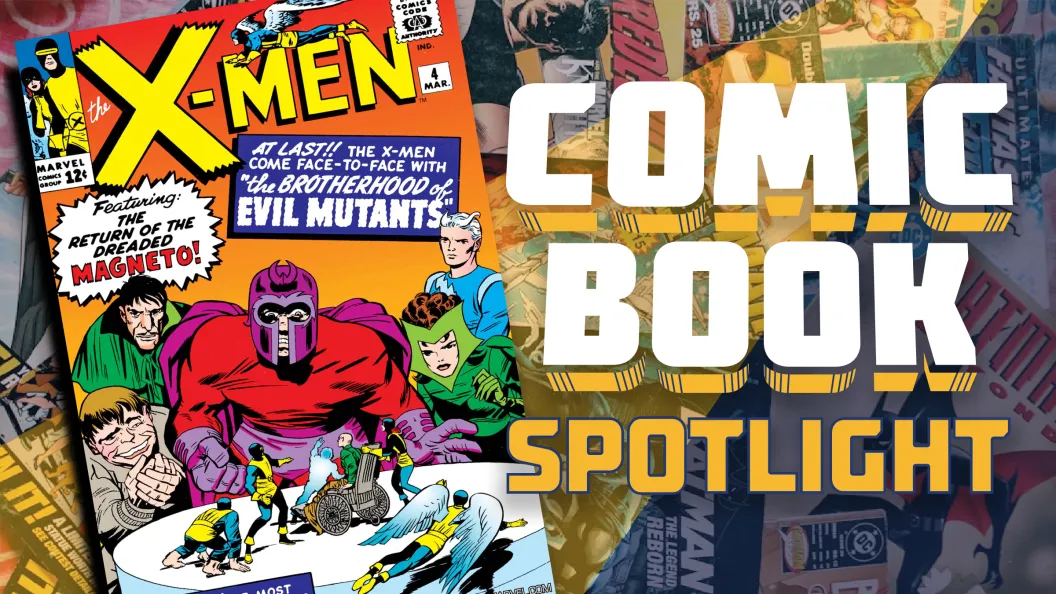
In simple terms, the release of X-Men #4 not only marked a significant milestone in Marvel Comics but also initiated the saga surrounding some of the most intricate family dynamics in the superhero universe. Announced by David Harth on July 30, 2026, the article on ComicBook.com highlights how this issue established themes that would evolve dramatically over decades, particularly concerning the relationships between Magneto, Quicksilver, and Scarlet Witch.
What happened is that X-Men #4, authored by Stan Lee and Jack Kirby, debuted the Brotherhood of Evil Mutants, led by Magneto. This was a turning point in the narrative structure of X-Men comics, introducing characters such as Quicksilver and the Scarlet Witch, who would go on to have a profound impact on the Marvel Universe. The article confirms these developments and emphasizes their importance in the sophisticated interplay of characters.
X-Men #4 originally struggled for popularity in a landscape dominated by other superhero titles early in the '60s. Despite this rocky start, its importance cannot be overstated. It introduced one of Marvel's first formidable villain teams, the Brotherhood of Evil Mutants, alongside pivotal characters that shaped the narrative. The inclusion of Quicksilver and Scarlet Witch introduced a familial layer to the conflict, which has had lasting repercussions.
The characterization of these siblings is essential in understanding their evolving roles in the Marvel saga. Initially, Quicksilver portrayed the role of the hotheaded protector of his sister, who is framed as the “favorite” daughter caught in the complex web of parental expectations and familial chaos. This nuance would lead to later revelations that they are indeed the children of Magneto, thereby complicating their loyalties and altering their character arcs significantly.
At the crux of the story, Magneto serves as both a villain and an archetypal patriarch. His vision for mutant supremacy starkly contrasts with Professor Xavier's dream of coexistence. This duality not only provides immediate conflict for the X-Men but also sets the stage for deeper familial struggles as the series unfolds. Harth notes that readers would later come to see Magneto's complexities and moral ambiguities—revealing him not just as a foe but also a deeply flawed leader trying to protect his kind.
The Brotherhood of Evil Mutants represented more than just an adversarial force against the X-Men; it provided a foil that showcased the ethical dilemmas within the superhero genre. Initially driven by Magneto’s vision, the group included other characters like Toad and Mastermind, each with unique traits that added layers to the storyline. Over the years, their prominence waned, but Harth emphasizes how the underpinnings established in X-Men #4 resonated through later issues, influencing major plot points and family dynamics in subsequent storylines.
The resonance between characters introduced in this issue and future story arcs laid a foundational narrative that would evolve into critical sagas for Marvel, especially in the early 2000s when Scarlet Witch gained more visibility through pivotal storylines.
While X-Men #4 initially faced obstacles, its contributions to Marvel's storytelling and character development are paramount. The early dynamics of the Brotherhood began to establish an intricate understanding of family ties, betrayal, and redemption that would echo through the pages of Marvel history. As the relationships evolved, much like the characters themselves, readers witnessed a transformative journey that affected not only storylines but also embraced broader themes of identity and belonging in the superhero realm.
What this means for fans and readers is that the legacy sparked by this single issue continues to thrive today, shaping how Marvel approaches character development and inter-family relationships in their narratives.
Marvel's commitment to storytelling, rooted in essential conflicts and character complexities, began proving essential in laying the groundwork for what the franchise would eventually represent in the realm of comics and beyond. This discussion is not just relevant for traditional fans but offers insight for newcomers seeking to understand the complexities behind these iconic characters.
For interested readers, X-Men #4 remains a pivotal piece of Marvel history that beckons deeper exploration into its legacy, driving audience engagement and shedding light on the intricate world of the X-Men and their associated narratives. To keep up with more Marvel developments, check out our pieces on Ant-Man 4 Fan Interest Complicated by Recent Polls and Top Marvel Comics to Watch from July 2026.
Entertainment news
EpisodeBreakdown may use automated tools to assist research, drafting, and formatting. Published pages are governed by our editorial and corrections policies, and source links are shown when they are available in the article record.
Discovery source: ComicBook.com. The source identifies where the topic was discovered; EpisodeBreakdown is responsible for the commentary published on this page.
Reader response
Reactions and poll results are based on real reader responses. No account is required.
Demons' Night Fever is set for an October release, featuring a unique RPG experience from Sōhei Niikawa.