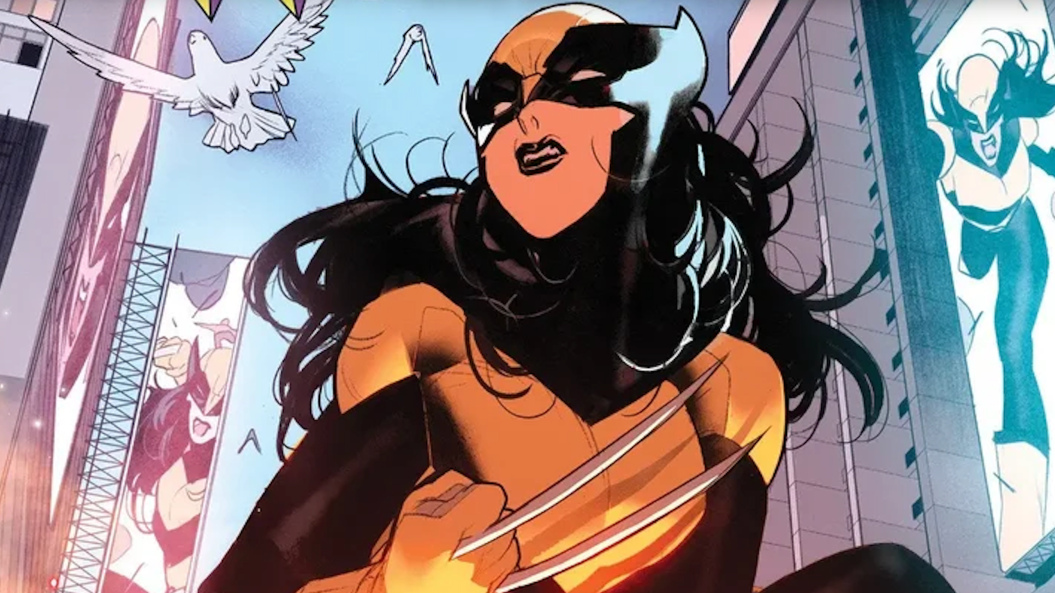
ComicBook.com has reported that Marvel Comics has officially introduced 10 characters created for non-comic media that later became mainstream in the Marvel Universe. The list includes characters from movies, TV shows, and video games that were initially developed for outside media but later transitioned into the main Marvel comics continuity.
The report, published on September 17, 2026, details how Marvel has historically adapted its characters across multiple platforms while also creating entirely new characters that eventually became part of the official Marvel Universe. This practice has been particularly prominent since the success of the Marvel Cinematic Universe (MCU), which has driven Marvel to create cross-platform synergies between its film, television, and comic book properties.
Scarlet Scarab Debuts in Moon Knight Series, Later Transitions to Comics
Layla El-Faouly, known as Scarlet Scarab, made her debut in the 2022 Disney+ series Moon Knight. As a brilliant archaeologist and Marc Spector's ex-wife, Layla became the avatar of the Egyptian goddess Taweret. In 2023, she made her comic book debut in Moon Knight Vol. 9 #25, where she was reimagined as a guardian of the Egyptian Underworld (Duat) and later returned to the mortal realm after reuniting with Moon Knight.
The character's transition from TV to comics was significant, as she was initially portrayed as a mercenary and love interest of Marc Spector before her death during a mission. Her comic book version expanded her role to include a more complex narrative involving the Egyptian underworld and her eventual return to the mortal realm.
Darcy Lewis from Thor Becomes a Comic Book Character
Darcy Lewis, originally a supporting character in the 2011 Thor film, became a recurring character in the Disney+ series WandaVision. In 2023, she made her comic book debut in Scarlet Witch Vol. 3 #1, where she was reimagined as the close friend and student of the master sorceress Scarlet Witch. Darcy, a disgraced journalist, now manages Scarlet Witch's occult shop, the Emporium, and has developed skills in the arcane arts.
This transition highlights how Marvel has leveraged cross-platform storytelling to create characters that resonate across different media, with Darcy evolving from a comic relief intern to a key figure in the Marvel Universe.
Melinda May from Agents of S.H.I.E.L.D. Enters Main Comics
Melinda May, a primary lead in the 2013 TV series Agents of S.H.I.E.L.D., made her comic book debut in S.H.I.E.L.D. Vol. 3 #1 in 2014. As Agent Coulson’s second-in-command, Melinda is a stoic ace pilot and martial artist who can fight on par with superhumans and aliens. She has since continued her role as an FBI agent and head of security for Iron Man’s company, Stark Unlimited.
Her transition from TV to comics demonstrates Marvel’s strategy of integrating characters from TV shows into the main Marvel Universe, ensuring continuity and audience engagement across multiple platforms.
Morph: A Shapeshifter Created for TV but Later Translated to Comics
Morph, originally developed as a shapeshifting mutant in the 1992 X-Men: The Animated Series, was rebranded due to legal issues. The character later appeared in Marvel’s Age of Apocalypse event (1994) and Earth-1081 (2001), where he became a founding member of the Exiles. Morph’s popularity led to the main Marvel Universe’s Changeling renaming himself after his more popular counterpart.
This example illustrates how Marvel has adapted characters from animated series to fit into the broader Marvel multiverse, creating a character that has become a fan-favorite across multiple universes.
Luna Snow: A K-Pop Star Who Became a Comic Book Hero
Luna Snow, a South Korean K-Pop superstar, was created for the 2015 mobile role-playing game Marvel Future Fight. She gained cryokinesis from a lab accident and became a hero who fights evil while performing music. Luna made her comic book debut in War of the Realms: New Agents of Atlas #1 in 2019 and has since been a prominent member of the Asian superhero teams Agents of Atlas and Tiger Division.
Her transition from video game to comics highlights Marvel’s ability to integrate characters from digital platforms into the main Marvel Universe, expanding the audience for both gaming and comic book fans.
Reptil: A Hero from the Superhero Squad Show
Reptil, a character from the 2009 Superhero Squad Show, gained his powers from a fossilized amulet that transformed him into a prehistoric creature shapeshifter. He made his comic book debut in Avengers: The Initiative Featuring Reptil #1 and later joined Avengers Training Academy.
Reptil’s story reflects Marvel’s history of creating characters for children’s programming that later evolved into more complex narratives in the main Marvel Universe.
H.E.R.B.I.E.: The Robot Butler from Fantastic Four
H.E.R.B.I.E. (Highly Engineered Robot Built for Interdimensional Exploration) was created for the 1978 Fantastic Four animated series. He made his comic book debut in Fantastic Four Vol. 1 #209 in 1979 and became a beloved character as the Fantastic Four’s assistant, babysitter for Franklin and Valeria Richards, and caretaker of the Baxter Building.
This character exemplifies Marvel’s early efforts to create characters that could bridge the gap between animation and comic book storytelling.
Firestar: A Fire-Themed Mutant from Spider-Man Animated Series
Firestar, a character from the 1981 Spider-Man and His Amazing Friends animated series, made her comic book debut in Uncanny X-Men Vol. 1 #193 in 1985. She was initially portrayed as a brainwashed member of the supervillain team Hellions but later became a hero who joined teams like Freedom Force and New Warriors.
Firestar’s transition from animation to comics shows how Marvel has historically adapted characters from animated series to fit into the broader Marvel Universe.
Phil Coulson: From MCU to Main Comics
Phil Coulson, a key supporting character in the MCU’s Phase One, made his comic book debut in Battle Scars #1 in 2011. He was initially portrayed as a victim of Loki’s manipulation but later became a central figure in Marvel’s comics, including his role in the Secret Empire event.
Coulson’s story demonstrates how Marvel has integrated characters from film into the main comics continuity, ensuring that the MCU’s narrative extends beyond the screen.
X-23: A Hero Created for X-Men: Evolution
X-23, created for the 2000 X-Men: Evolution animated series, made her comic book debut in NYX #3 in 2003. She is a clone of Wolverine with his powers and has become a key figure in Marvel’s comics, particularly in stories involving the X-Men.
X-23’s transition from animation to comics highlights Marvel’s commitment to expanding its character universes across multiple platforms.
ComicBook.com’s report underscores Marvel’s strategic approach to cross-platform storytelling, where characters created for non-comic media become integral parts of the Marvel Universe. This practice has helped Marvel maintain audience engagement and expand its storytelling across multiple platforms.
Entertainment news
About this breakdown
PublishedNovember 26, 2026
Last updatedNovember 26, 2026
Topics coveredMarvel Comics Officially Confirms 10 Characters Created for Non-Comic MediaScarlet Scarab Debuts in Moon Knight Series, Later Transitions to ComicsDarcy Lewis from Thor Becomes a Comic Book CharacterMelinda May from Agents of S.H.I.E.L.D. Enters Main Comics
EpisodeBreakdown may use automated tools to assist research, drafting, and formatting. Published pages are governed by our editorial and corrections policies, and source links are shown when they are available in the article record.
Discovery source: ComicBook.com. The source identifies where the topic was discovered; EpisodeBreakdown is responsible for the commentary published on this page.