Warner Bros. Animation has quietly become the most reliable Batman studio on the planet, which makes its blind spot easier to see. The catalog is deep, the batting average is high, and the strongest entries hold up against anything in the live-action canon. The problem is not the filmmaking and it is not the voice work. The problem is the source list.
Warner Bros. Animation’s Batman Catalog Blind Spot
Warner Bros. Animation has become the most reliable Batman studio on the planet, with a catalog that consistently delivers high-quality adaptations. The studio’s recent films, including Batman: Knightfall and Batman: Hush, have held up well against live-action counterparts, demonstrating strong production values and voice acting. However, the studio’s reliance on a limited set of source material has created a blind spot in its animation pipeline.
The Repetition Problem in Batman Adaptations
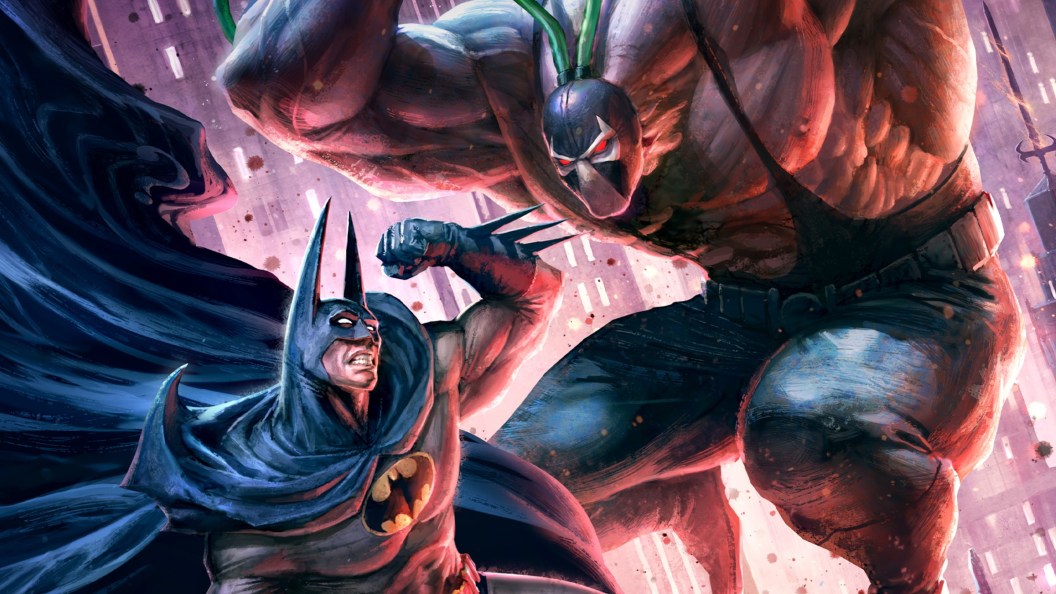
The studio has adapted seven major Batman stories from the comics, including Year One, The Killing Joke, The Long Halloween, Hush, A Death in the Family, The Dark Knight Returns, and Knightfall. This repetition has led to a noticeable pattern where the same stories are revisited without significant innovation. As noted in the article, the Knightfall trilogy—featuring Anson Mount as Batman and Michael Mando as Bane—has been criticized for trying to compress a sprawling multi-year crossover into three films.
Four Untold Storylines That Could Solve the Problem
The article identifies four underutilized Batman stories that Warner Bros. Animation could prioritize to address its current blind spot:
1. Arkham Asylum: A Serious House on Serious Earth
Grant Morrison and Dave McKean’s 1989 graphic novel, Arkham Asylum: A Serious House on Serious Earth, has sold over 600,000 copies worldwide and is considered one of the most acclaimed Batman comics. Despite its popularity, it has never been animated. The book’s visual style—shifting between painting, photographic collage, and near-abstraction—makes it uniquely suited for animation, which can preserve its stylistic complexity without flattening it into a single lens. The story’s psychological depth and dark themes also align with the studio’s recent focus on mature storytelling.
2. Batman: Year 100
Paul Pope’s 2006 four-issue miniseries Batman: Year 100 won two Eisner Awards and has never been adapted. Set in 2039, the story follows Batman as a sprinter in a dystopian Gotham where the city is under surveillance. The comic’s kinetic energy and focus on physicality make it ideal for animation, which can emphasize movement without the static limitations of live-action. The story’s compact scope—four issues—also aligns with the studio’s need for efficient storytelling.
3. The Black Mirror
This 2011 story, written by Scott Snyder and illustrated by Jock and Francesco Francavilla, features Dick Grayson as Batman while Bruce Wayne runs Batman Incorporated. The story’s focus on a detective narrative and its small cast make it well-suited for animation. Warner Bros. Animation has spent decades building an audience for Dick Grayson as Batman but has never provided a story that fully utilizes this potential.
4. No Man’s Land
Pitched twice to Warner Bros. Animation in the 1990s and 2000s, No Man’s Land is a post-apocalyptic story where Gotham is divided after an earthquake. The story’s scale and focus on city-wide chaos make it ideal for a series rather than a film. The studio has previously rejected it, but its relevance to recent projects like The Dark Knight Rises and Batman: Hush suggests it could be a strong candidate for future adaptations.
Why These Stories Matter Now
The studio’s current blind spot—relying on the same stories repeatedly—has become increasingly problematic as the Knightfall trilogy approaches completion. By prioritizing these four stories, Warner Bros. Animation could address both creative and audience fatigue while expanding its storytelling range. The Arkham Asylum adaptation, in particular, has been a long-standing goal for the studio, with director Jay Oliva previously expressing interest in bringing it to life before leaving in 2017.
The Path Forward
While Warner Bros. Animation has proven its ability to adapt Batman stories, the studio’s current focus on a narrow set of source material risks diminishing its creative impact. The article emphasizes that the catalog is not running out of stories but rather running out of stories it has already told. By shifting focus to these underutilized narratives, the studio could maintain its reputation for quality while introducing fresh perspectives to its audience.
Warner Bros. Animation’s Batman Catalog Blind SpotThe Repetition Problem in Batman AdaptationsFour Untold Storylines That Could Solve the Problem1. Arkham Asylum: A Serious House on Serious Earth
EpisodeBreakdown may use automated tools to assist research, drafting, and formatting. Published pages are governed by our editorial and corrections policies, and source links are shown when they are available in the article record.
Discovery source:ComicBook.com. The source identifies where the topic was discovered; EpisodeBreakdown is responsible for the commentary published on this page.
Reader response
What did you think?
Be the first to react
Reactions and poll results are based on real reader responses. No account is required.
Continue the story
news
Captain America, Iron Man, and Thor Don’t Define the Avengers, These 5 Heroes Do
ComicBook.com reports that while Captain America, Iron Man, and Thor are often considered the core Avengers, the team’s true identity is defined by five key members who have shaped its legacy.Read next →