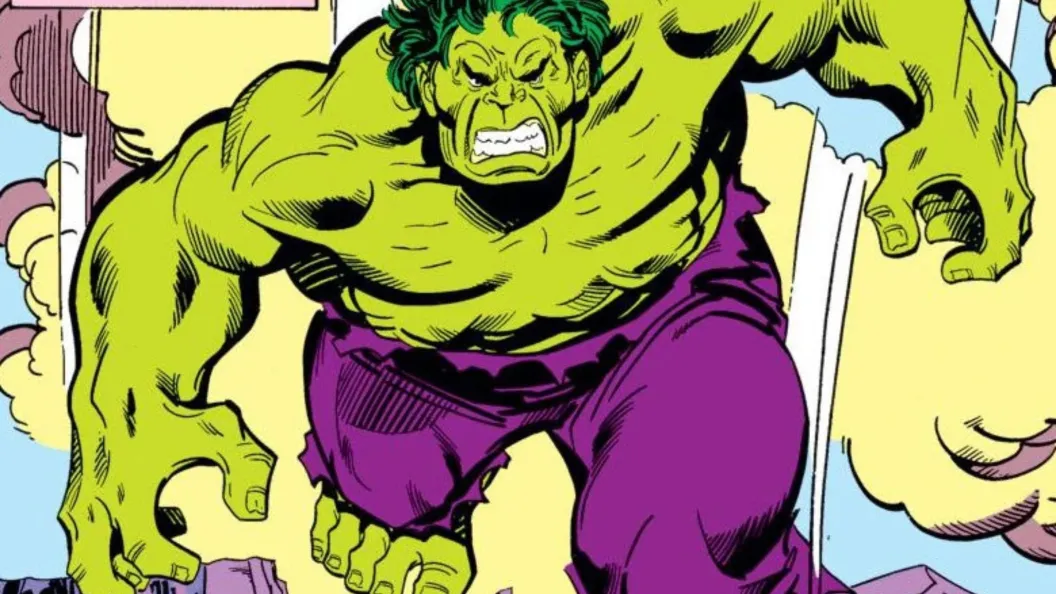
46 years ago, Marvel Comics introduced the U-Foes—a twisted version of the Fantastic Four created to battle the Hulk. This team debuted in The Incredible Hulk #254 (1980) and became the Hulk's primary adversaries, despite never being official Fantastic Four villains.
Marvel's U-Foes Debuted in The Incredible Hulk #254 (1980)
On September 16, 1980, Marvel Comics released The Incredible Hulk #254 by Bill Mantlo and Sal Buscema, introducing the U-Foes—a supervillain team designed as a twisted counterpart to the Fantastic Four. The cover art by Al Milgrom prominently featured the headline: "The Hulk Faces Four Fantastic New Enemies." This comic marked the first time Marvel created a team explicitly meant to be the Fantastic Four’s evil version, though it was never officially part of the Fantastic Four universe.
The U-Foes were formed when millionaire Simon Utrecht attempted to replicate the cosmic radiation event that granted the Fantastic Four their powers. Utrecht’s team—comprising pilot Mike Steel, life-support specialist Ann Darnell, fuel-propulsion engineer Jimmy Darnell, and Utrecht himself—planned to fly unshielded into cosmic rays to gain powers. However, Bruce Banner intervened by redirecting their ship back to Earth before they could absorb the radiation. As a result, all four gained powers but in unintended ways, leading to their transformation into the U-Foes.
The U-Foes' Power Dynamics and Origins
Simon Utrecht became Vector, a telekinetic and psychokinetic being whose powers were unstable due to cosmic radiation exposure. Mike Steel transformed into Ironclad, a steel-bodied figure with the ability to sink into the ground. Jimmy Darnell evolved into X-Ray, a living energy entity unable to revert to human form. Ann Darnell became Vapor, capable of turning her body into a gas but limited to brief returns to human form.
The team’s origin story was rooted in Utrecht’s ambition to use their powers for selfish purposes, not for the public good. After Banner disrupted their mission, Utrecht and his team declared Banner and the Hulk their sworn enemies, setting the stage for decades of conflict.
The U-Foes' Long-Term Role in Hulk Storylines
For nearly 40 years, the U-Foes remained the Hulk’s primary adversaries, appearing in The Incredible Hulk series and occasionally hired by the U.S. government to stop the Hulk in exchange for pardons. Despite these temporary alliances, they consistently operated as villains, reflecting their original design as a threat to the Hulk’s existence.
A pivotal moment in the U-Foes’ history occurred in Maestro #4 (2020), where Vapor demonstrated her immense power by assassinating the demigod Hercules. This event highlighted the team’s potential for high-stakes confrontations, though it also underscored the U-Foes’ role as a team that rarely achieved lasting victories.
Why the U-Foes Matter Today
The U-Foes’ legacy is significant because they represent Marvel’s early exploration of villain teams with complex origins and motivations. Unlike many Marvel villains, the U-Foes were created as a direct response to the Fantastic Four’s powers, making them a unique part of the Hulk’s narrative. Their story also reflects the era’s emphasis on cosmic radiation as a power source—a theme that would resurface in later Marvel comics.
The team’s enduring presence in Hulk stories, even after decades, shows how Marvel has consistently used the U-Foes as a recurring threat. Their most recent high-profile moment—Vapor’s assassination of Hercules—proves that the U-Foes remain relevant in modern Marvel storytelling.
The U-Foes' Impact on Marvel’s Villain Ecosystem
While the U-Foes were never part of the Fantastic Four’s official universe, their influence extended beyond Hulk stories. They became a template for future Marvel villain teams, emphasizing the importance of origin stories and the consequences of power misuse. The U-Foes’ story also highlights how Marvel’s creative teams often use past events to inform present conflicts, a practice that continues today.
The U-Foes’ legacy is a reminder that even teams designed as temporary threats can become integral to Marvel’s long-term narrative. Their story remains a fascinating example of how Marvel’s early creative decisions shaped the company’s identity as a storyteller of complex, evolving universes.
Marvel's U-Foes Debuted in The Incredible Hulk #254 (1980)The U-Foes' Power Dynamics and OriginsThe U-Foes' Long-Term Role in Hulk StorylinesWhy the U-Foes Matter Today
EpisodeBreakdown may use automated tools to assist research, drafting, and formatting. Published pages are governed by our editorial and corrections policies, and source links are shown when they are available in the article record.
Discovery source:ComicBook.com. The source identifies where the topic was discovered; EpisodeBreakdown is responsible for the commentary published on this page.
Reader response
What did you think?
Be the first to react
Reactions and poll results are based on real reader responses. No account is required.
Continue the story
news
Captain America, Iron Man, and Thor Don’t Define the Avengers, These 5 Heroes Do
ComicBook.com reports that while Captain America, Iron Man, and Thor are often considered the core Avengers, the team’s true identity is defined by five key members who have shaped its legacy.Read next →