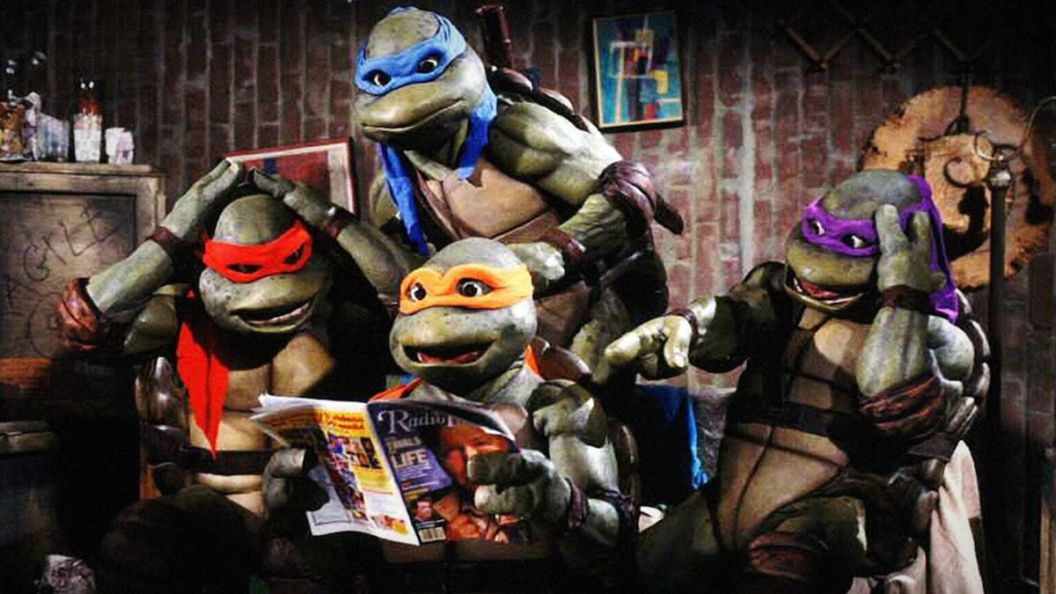
By 1997 the Teenage Mutant Ninja Turtles had already been a comic, a cartoon, three movies, a concert tour and an aisle of the toy store, which meant the franchise had reached the stage every successful property eventually reaches, where the people who own it start looking for something to add. Saban Entertainment had the live-action rights and a formula that was printing money, because Power Rangers had taught the company that costumed teenagers, rubber monsters and a Vancouver soundstage could fill a Saturday morning indefinitely. So a new live-action Turtles show was always coming. What arrived with it was a decision that I have now spent most of my life turning over, one that the franchise's own co-creator later described in language a publicist would need a lie-down after reading, and one that quietly shaped what the Turtles were allowed to be for the next two decades.
In 1997, Saban Entertainment made a decision that would redefine the Teenage Mutant Ninja Turtles franchise for the next two decades. The company launched Ninja Turtles: The Next Mutation on Fox Kids on September 12, 1997, a live-action series that ran for 26 episodes before canceling. The show introduced Venus de Milo, a fifth Turtle who was not a blood relative of the original four but a sister raised in China by a mystical mentor named Chung I. This character was designed to address a business need rather than a creative one: Saban wanted to test the market for female action figures.
The decision to create Venus de Milo was rooted in a toy-driven strategy. Lance H. Robbins, the Saban executive who produced the series, explained that the company aimed to see if girls would buy a Turtle figure. As Robbins stated, the show was a response to the need for a female character in the franchise, which was a business question rather than a creative one. The character’s origin story was later revealed to have begun as a male character named Kirby, developed for an unmade live-action film by the Turtles’ co-creators Kevin Eastman and Peter Laird. Saban’s request to change the character to female was the first major shift in its development.
Why Peter Laird Called Venus de Milo 'Creatively Bankrupt'
Peter Laird, one of the Turtles’ co-creators, has been critical of the decision since its inception. In a 2009 blog post, he described the character as 'weak, facile, and creatively bankrupt,' arguing that adding a fifth Turtle disrupted the balance of the original four. Laird emphasized that the four Turtles formed a near-perfect group, and introducing a fifth character made the story awkward and ill-weighted. He noted that the structural issue was that once the number of characters became negotiable, there was no principled way to stop adding more, which would thin out the characters people actually cared about.
Laird’s criticism was not just about the character design but the franchise’s approach to storytelling. He explained that the show’s creative rules, including the absence of Venus de Milo from the 2003 animated series and the 2007 film, were a direct result of his influence. The character was effectively erased from the franchise until 2026, when she reappeared in Mighty Morphin Power Rangers / Teenage Mutant Ninja Turtles III.
The Long Road to Venus de Milo’s Return
Venus de Milo’s absence from the franchise lasted 24 years. She was reintroduced in March 2026 through a crossover comic, Mighty Morphin Power Rangers / Teenage Mutant Ninja Turtles III, which was published by Hasbro after acquiring the Power Rangers franchise. This return was part of a broader trend in the franchise, as IDW Comics had previously brought Venus back in 2019 through Teenage Mutant Ninja Turtles #127, where she was rebuilt as a scientist rather than a sibling.
The 2026 crossover marked a significant shift in the franchise’s approach to character continuity. Hasbro’s acquisition of Power Rangers, which had been owned by Saban since 1997, created the conditions for Venus de Milo to reappear in a context that honored her original purpose: to provide a female character for the franchise. The crossover itself was also a direct result of the 1997 decision, as the Turtles had previously appeared in two episodes of Power Rangers in Space in 1998, a collaboration that established the Turtles as canon within the Power Rangers universe.
Why the 1997 Decision Still Matters Today
The 1997 decision to create Venus de Milo was made for the wrong reasons but had a positive outcome. While the character was initially designed to fill a toy market gap, she eventually became a symbol of the franchise’s ability to evolve. The decision to create a female character in the Turtles’ universe was ahead of its time, as the franchise did not fully embrace female characters until decades later. The 2026 crossover comic, which brought Venus back as part of a Power Rangers story, shows how the original business decision has had a lasting impact on the franchise’s storytelling.
The Turtles’ 1997 decision to create Venus de Milo remains a pivotal moment in the franchise’s history. It was a business-driven choice that initially seemed flawed but ultimately helped the franchise address a long-standing gap in its storytelling. The character’s return in 2026 demonstrates how the franchise has come full circle, using the same logic that created her in 1997 to solve a modern problem.
The 1997 Decision That Created Venus de MiloWhy Peter Laird Called Venus de Milo 'Creatively Bankrupt'The Long Road to Venus de Milo’s ReturnWhy the 1997 Decision Still Matters Today
EpisodeBreakdown may use automated tools to assist research, drafting, and formatting. Published pages are governed by our editorial and corrections policies, and source links are shown when they are available in the article record.
Discovery source:ComicBook.com. The source identifies where the topic was discovered; EpisodeBreakdown is responsible for the commentary published on this page.
Reader response
What did you think?
Be the first to react
Reactions and poll results are based on real reader responses. No account is required.
Continue the story
news
Captain America, Iron Man, and Thor Don’t Define the Avengers, These 5 Heroes Do
ComicBook.com reports that while Captain America, Iron Man, and Thor are often considered the core Avengers, the team’s true identity is defined by five key members who have shaped its legacy.Read next →