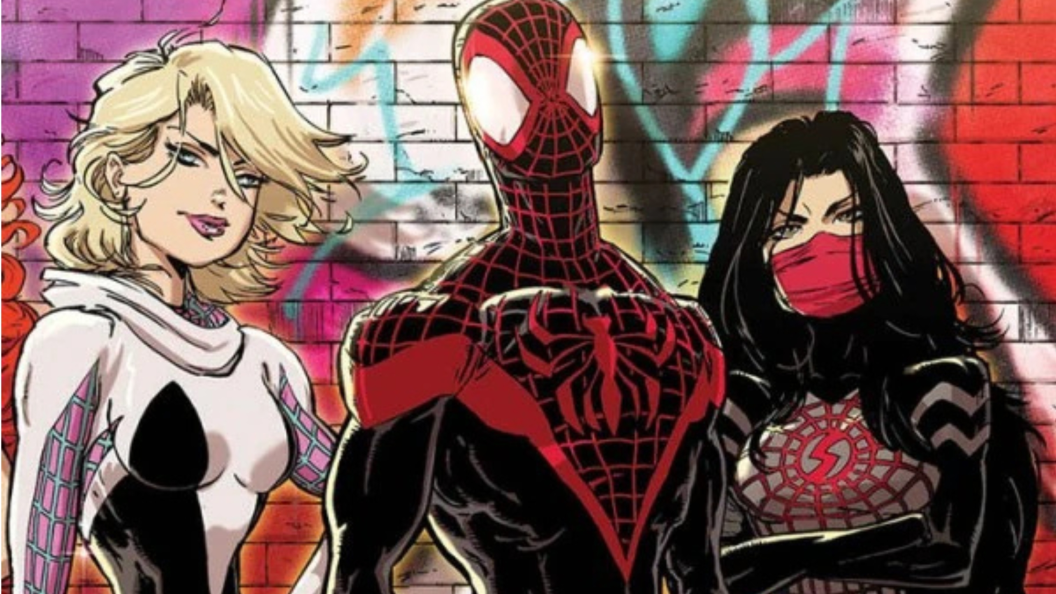
Marvel Comics resurrected Gwen Stacy in Edge of Spider-Verse #2 (2014) as Ghost-Spider from Earth-65, honoring her death without undermining the significance of 'The Night Gwen Stacy Died' in Marvel history.
Marvel Resurrected Gwen Stacy in 2014 Without Ruining Her Death in the Best Way Possible
On September 17, 2014, Marvel Comics resurrected Gwen Stacy in Edge of Spider-Verse #2 by Jason Latour and Robbi Rodriguez, introducing her as Ghost-Spider from Earth-65. This resurrection occurred 12 years after the character’s death in The Amazing Spider-Man #121 (1963), and it became the most impactful way Marvel has handled the character’s return without undermining the significance of her death.
The resurrection was part of Marvel’s Spider-Verse multiverse initiative, which aimed to explore alternate realities through a five-issue miniseries. Edge of Spider-Verse #2 specifically introduced Gwen Stacy as a hero from Earth-65, where she was bitten by the radioactive spider and became Spider-Gwen. This version of Gwen had a complex relationship with Peter Parker, who died fighting her in a tragic confrontation that haunted her. The issue also established her role as a musician in a band called The Mary Janes with fellow heroes Glory Grant, Em Jay Watson, and Betty Brant.
Why This Resurrection Was Significant
Gwen Stacy’s death in The Amazing Spider-Man #121 is widely regarded as the moment that ended Marvel’s Silver Age. The character’s death was a pivotal event that shifted the company’s creative direction, and Marvel has never officially brought her back in a way that diminished the impact of her death. The 2014 resurrection in Edge of Spider-Verse #2 was designed to honor this history while introducing a new dimension to her character.
Unlike previous attempts to bring Gwen back—such as the clone versions created by Jackal to torment Peter Parker—this resurrection avoided the pitfalls of past retcons. The Spider-Verse storyline ensured that Gwen’s return was tied to a multiverse framework, allowing her to exist without contradicting the original timeline. This approach respected the gravity of her death while providing a fresh narrative for her character.
The Earth-65 Gwen Stacy: A New Chapter
In Earth-65, Gwen Stacy became a hero after being bitten by the radioactive spider, a role that led to her tragic death in The Amazing Spider-Man #121. Her resurrection in Edge of Spider-Verse #2 established her as Ghost-Spider, a character who now operates on Earth-616 alongside Miles Morales, Silk, and other heroes. This version of Gwen had a unique relationship with Peter Parker, who died fighting her in a confrontation that left her haunted by the loss.
The issue also detailed how Gwen revealed her identity to her father and was chosen to fight in the upcoming Spider-Verse crossover event. This resurrection was part of a larger narrative that explored the multiverse, with Edge of Spider-Verse #2 serving as a bridge to the Spider-Verse event. The issue’s focus on Gwen’s origin and her current life as a superhero and musician highlighted her role in the broader Marvel universe.
A One-Time Return in 2022
While the 2014 resurrection was the primary method Marvel used to bring Gwen Stacy back, there was a brief return in The Amazing Spider-Man #10 (2022) during the A.X.E.: Judgment Day crossover event. In this issue, Gwen appeared as a ghostly figure to Peter Parker, who had been judged by a celestial entity called the Progenitor. This moment was a temporary return that did not alter the original timeline or undermine the significance of her death.
The 2022 appearance was a poignant moment for Peter Parker, who finally reconciled with Gwen by forgiving Norman Osborn and acknowledging his love for her. The Progenitor then granted Peter Parker a gift: a brief moment with Gwen Stacy, who said, ‘He just wanted to give us a moment to see that beautiful heart of yours open.’ This return was limited to a single issue and did not involve a permanent resurrection.
Why This Matters for Marvel Fans
Marvel’s approach to resurrecting Gwen Stacy in 2014 set a precedent for handling character deaths in the Marvel universe. By using the multiverse as a narrative device, Marvel avoided the common pitfall of retcons that undermine the significance of a character’s death. This method allowed for a respectful and impactful return that honored Gwen Stacy’s legacy while expanding the Marvel universe in a way that felt organic.
The 2014 resurrection also demonstrated Marvel’s commitment to storytelling that respects historical events. Unlike previous attempts to bring Gwen back through clones or other means, this resurrection was designed to be a meaningful addition to the Marvel universe without diminishing the impact of her death. This approach has become a model for how Marvel handles character deaths and resurrections in the future.
Why This Resurrection Was SignificantThe Earth-65 Gwen Stacy: A New ChapterA One-Time Return in 2022Why This Matters for Marvel Fans
EpisodeBreakdown may use automated tools to assist research, drafting, and formatting. Published pages are governed by our editorial and corrections policies, and source links are shown when they are available in the article record.
Discovery source:ComicBook.com. The source identifies where the topic was discovered; EpisodeBreakdown is responsible for the commentary published on this page.
Reader response
What did you think?
Be the first to react
Reactions and poll results are based on real reader responses. No account is required.
Continue the story
news
Captain America, Iron Man, and Thor Don’t Define the Avengers, These 5 Heroes Do
ComicBook.com reports that while Captain America, Iron Man, and Thor are often considered the core Avengers, the team’s true identity is defined by five key members who have shaped its legacy.Read next →