Dungeon Crawler Carl Series Books Discounted Up to 43%
The Dungeon Crawler Carl series by Matt Dinniman is now available at discounts of up to 43% off on Amazon, providing an affordable way for fans to join its growing following.
Star Trek: The Original Series faced a ban in Britain due to violent content in the episode 'Plato's Stepchildren,' not because of its historic interracial kiss.
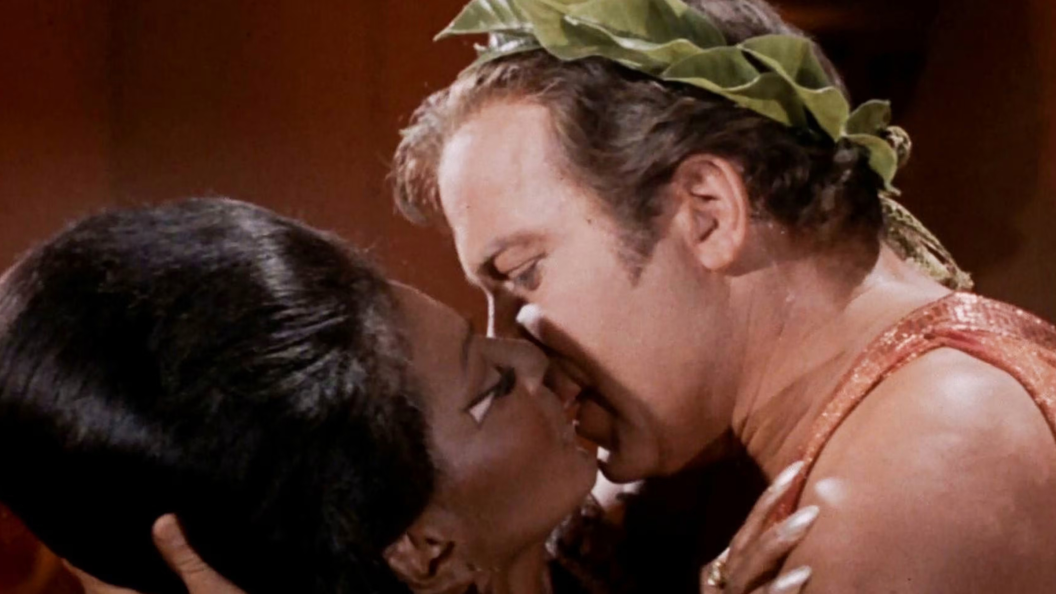
The episode "Plato's Stepchildren" from Star Trek: The Original Series, which originally aired in 1968, is renowned for featuring the first interracial kiss on American television between Captain Kirk and Lt. Uhura. However, a comprehensive examination reveals that the reason for its ban in Britain was primarily due to the violence depicted rather than any discomfort surrounding the historic romantic moment.
The British Broadcasting Corporation (BBC) decided not to air this significant episode because it deemed the violent content unsuitable for its target audience—children. The narrative focuses on a sadistic leader who relishes in tormenting others, including scenes depicting torture and humiliation. While the show was aimed at a more mature viewership, the BBC’s classification of Star Trek as a children's program greatly influenced their decision to prohibit the episode. This classification led to a broader censorship philosophy, where any show deemed excessively violent or sexual was likely to face restrictions.
The episode includes intense moments where the leader of the Platonians, a character called Parmen, utilises his telekinetic powers to force the Enterprise crew into submissive and humiliating scenarios, including making Kirk and Spock dance against their will. Such depictions of torture turned out to be the decisive factor in the BBC's decision. Critics have noted that while the episode contained violence that was atypical for a series considered suitable for children, it was not extraordinarily graphic by modern standards.
Despite its ban, "Plato's Stepchildren" remains one of the most pivotal episodes in the Star Trek universe. It addresses complex themes such as power dynamics, abuse, and race relations. The culturally significant kiss, although groundbreaking, is only a small part of an overarching narrative that critiques the abuse of power and highlights the strengths of human character prevailing over oppression. The irony lies in the fact that while the kiss received widespread acclaim, the BBC fixated on the more violent aspects of the plot, resulting in censorship.
Even though it experienced a lengthy ban, "Plato's Stepchildren" has become an influential episode within the Star Trek canon. Its willingness to tackle difficult social issues within a science fiction context allowed it to engage with urgent matters of race and equality. Observers have noted that the very elements the BBC found objectionable—violence and sadism—overshadowed the progressive elements in the storyline, such as the depiction of an interracial relationship in a time marked by racial tensions.
The circumstances surrounding the BBC’s ban on "Plato's Stepchildren" illustrate how prevailing societal norms and broadcasting standards can shape content acceptance, especially in the 1960s. The decision to censor the episode for its violent themes rather than its groundbreaking representation serves as a poignant reminder of the often intricate relationship between media, culture, and societal values.
The dialogue around Star Trek continues to resonate today, encouraging viewers to reflect on historical censorship and the evolution of media narratives. The lessons derived from "Plato's Stepchildren" highlight crucial conversations regarding representation, morality, and the lasting legacy of censorship in storytelling. As we evaluate its impact, we find ourselves engaging in dialogues surrounding race, power, and societal expectations in the modern media landscape.
Entertainment news
EpisodeBreakdown may use automated tools to assist research, drafting, and formatting. Published pages are governed by our editorial and corrections policies, and source links are shown when they are available in the article record.
Discovery source: ComicBook.com. The source identifies where the topic was discovered; EpisodeBreakdown is responsible for the commentary published on this page.
Reader response
Reactions and poll results are based on real reader responses. No account is required.