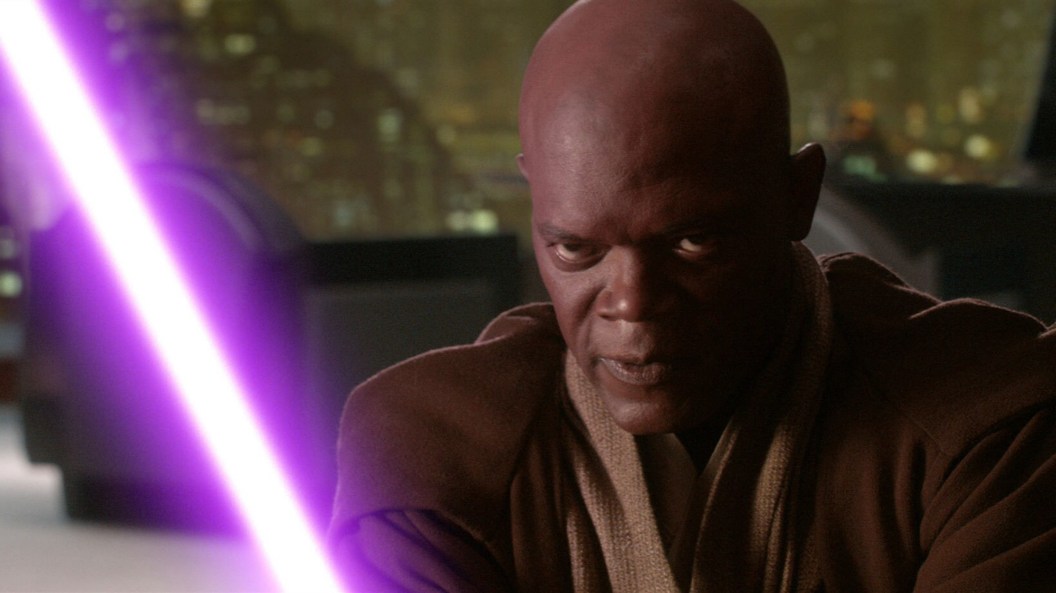
Samuel L. Jackson first appeared as Jedi Master Mace Windu in Star Wars: Episode I – The Phantom Menace (1999). Six years prior, a non-human Mace Windu existed in licensed Star Wars material as a fur-covered droid dealer in Mos Eisley, a detail from a 1993 West End Games sourcebook.
ComicBook.com Reports Mace Windu's Pre-1999 Licensing History
ComicBook.com has confirmed that a non-human character named Mace Windu appeared in licensed Star Wars material six years before Samuel L. Jackson’s debut as Jedi Master Mace Windu in Star Wars: Episode I – The Phantom Menace (May 19, 1999). The character, described as a fur-covered droid dealer in Mos Eisley, was first documented in Galaxy Guide 7: Mos Eisley, a 96-page reference manual published by West End Games in 1993.
This discovery was made public after a fan account highlighted the timeline in August 2026, revealing how the name originated in a 1973 treatment by George Lucas and later appeared in a 1996 short story by freelancer Pablo Hidalgo. The character’s name was not an homage but a discarded element from Lucas’s early drafts.
The 1973 Origin of the Name
George Lucas wrote a 13-page treatment titled The Journal of the Whills in January 1973, which included a character named Mace Windy—a Jedi-bendu from Ophuchi. The name was misspelled and the character’s rank was different from the later version. Lucas abandoned the treatment, and the name disappeared through subsequent drafts until it resurfaced in The Phantom Menace.
The 1973 draft was the earliest recognizable version of Star Wars material, and Lucas later reused the name for a Jedi Council member in The Phantom Menace (1999). This dual usage created a continuity gap between the 1993 sourcebook and Jackson’s 1999 film role.
West End Games' Role in Licensing
West End Games held the Star Wars roleplaying license from 1987 to 2014 and produced dozens of reference books to help game masters create in-universe scenarios. Galaxy Guide 7: Mos Eisley was one of these books, designed to fill details about Tatooine’s spaceport.
The droid dealer in the book—referred to as the Squib—was a fur-covered character who sold used droids. The name Mace Windu was a placeholder for a character with no official status, and West End Games used it without Lucasfilm’s approval. The character’s name was later expanded in a 1996 short story by Pablo Hidalgo, who later joined Lucasfilm’s Story Group.
Pablo Hidalgo's Legacy
Pablo Hidalgo, the author of the 1996 short story Spare Parts, gave the Squib a full name: Macemillian-winduarté. Hidalgo joined Lucasfilm in 2000 and became a founding member of the Lucasfilm Story Group in 2014, where he helps define what counts as official Star Wars lore.
The short story was published in Star Wars Adventure Journal #11 and focused on a droid dealer in Mos Eisley, a detail that became part of the franchise’s expanded universe. The character’s name was not intended to be a homage but a practical placeholder for a game setting.
How the Timeline Was Resolved
Lucasfilm later established that the Jedi Mace Windu helped defend the Squib’s homeworld of Skor II during the Clone Wars. This connection resolved the continuity issue by framing the droid dealer as a historical figure with a legacy in the Star Wars universe.
The character was officially retired from active continuity in 2014 when Lucasfilm moved the Expanded Universe under the Legends banner, making the Squib a non-official character once again.
Why This Matters for Fans
The discovery highlights how early Star Wars material was used as a resource for game mechanics rather than official lore. The 1993 Galaxy Guide 7 was part of a broader trend where licensees created content without Lucasfilm’s direct oversight, leading to a character that existed for over a decade before being integrated into the franchise’s narrative.
This history underscores the complexity of Star Wars’ timeline and the role of licensed material in shaping the franchise’s evolution. For fans, it’s a reminder that some characters were never meant to be central but became part of the lore through practical licensing decisions.
ComicBook.com Reports Mace Windu's Pre-1999 Licensing HistoryThe 1973 Origin of the NameWest End Games' Role in LicensingPablo Hidalgo's Legacy
EpisodeBreakdown may use automated tools to assist research, drafting, and formatting. Published pages are governed by our editorial and corrections policies, and source links are shown when they are available in the article record.
Discovery source:ComicBook.com. The source identifies where the topic was discovered; EpisodeBreakdown is responsible for the commentary published on this page.
Reader response
What did you think?
Be the first to react
Reactions and poll results are based on real reader responses. No account is required.
Continue the story
news
29 Years Ago, X-Men: The Animated Series Left Professor X’s Fate Uncertain for Decades
X-Men: The Animated Series ended with a shocking cliffhanger in its 1997 finale that left Professor Charles Xavier’s fate uncertain, a plot thread that would not be resolved until the 2024 revival series X-Men '97.Read next →