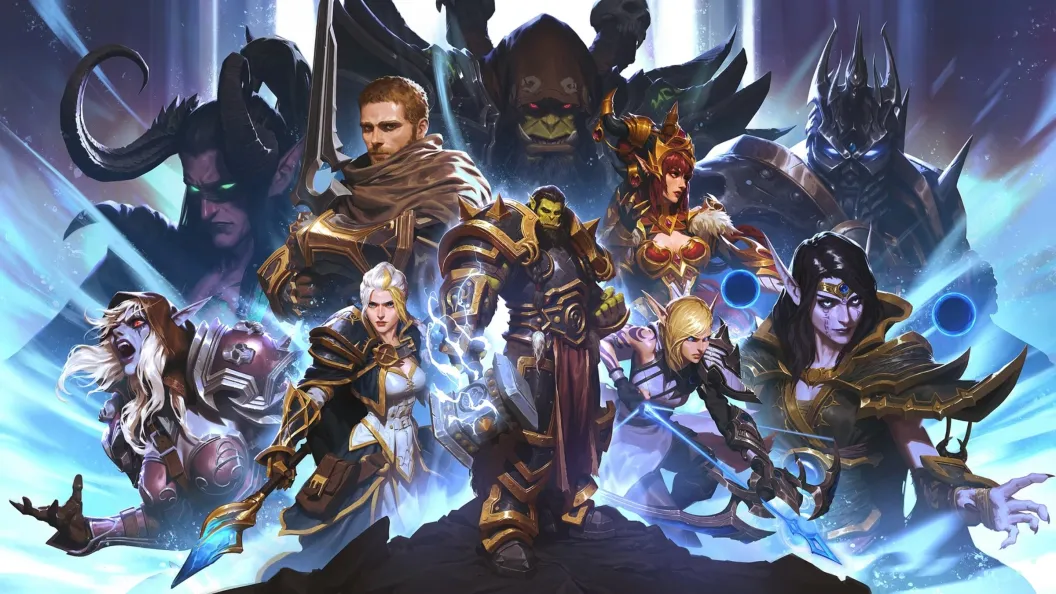
Blizzard has officially confirmed that a standalone World of Warcraft 2 sequel is not in development, with the company emphasizing the game's enduring legacy and the strategic value of its current expansion cycle.
Blizzard Officially Rules Out World of Warcraft 2 Sequel
Blizzard Entertainment has confirmed that a standalone World of Warcraft 2 sequel is not in development, with the company explicitly stating that the game's current trajectory does not require a direct sequel. The announcement was made through a recent editorial on ComicBook.com, which detailed Blizzard's strategic focus on evolving the existing World of Warcraft franchise rather than creating a new title.
The editorial, published on September 17, 2026, highlights that Blizzard has consistently avoided any concrete hints about a World of Warcraft 2 project over the past two decades. This stance aligns with the company's recent announcements at BlizzCon 2026, where the publisher teased the next chapter in the 'Eclipse' saga and hinted at their upcoming twelfth expansion, 'The Last Titan.'
World of Warcraft Classic and the 'Forever' Model
The editorial emphasizes that the success of World of Warcraft Classic has demonstrated the enduring strength of the original game design, while the upcoming 'World of Warcraft Forever' expansion further solidifies the game's status as a self-sustaining franchise. These initiatives effectively serve as a bridge between new and nostalgic players, allowing the base game to remain relevant without the need for a standalone sequel.
World of Warcraft Classic provides a remastered experience for players who want to revisit the original game, while the modern iteration continues to evolve through seasonal expansions. This dual approach has proven to be a strategic advantage, as it maintains player engagement without the risk of migration to a new title that could alienate the community.
Why a Sequel Would Be Unnecessary
Blizzard's decision to avoid a World of Warcraft 2 sequel stems from the game's proven resilience in the massively multiplayer online (MMO) genre. The game has weathered numerous industry challenges, including the rise of competitors and shifts in player expectations, without requiring a new title to maintain its relevance.
The editorial notes that World of Warcraft has become a 'bedrock' of the MMO genre, with players returning for hundreds of hours of content. Unlike many other games in the space that have struggled to retain players, World of Warcraft has maintained a consistent subscription base for over two decades. This longevity has allowed Blizzard to develop a sustainable model that prioritizes incremental updates over the creation of a new game.
Strategic Implications for Players
For players, the absence of a World of Warcraft 2 sequel means they can continue to engage with the game through its current expansion cycle without the risk of losing access to their favorite content. The 'Eclipse' saga is nearing its conclusion, with 'The Last Titan' set to follow, ensuring that the game remains a dynamic and evolving experience.
The editorial also highlights that the seasonal expansion model has been a key factor in maintaining the game's health. By releasing content at a steady pace, Blizzard has avoided the pressure to justify an entirely new game, which could have led to player attrition. This approach has been particularly effective in an industry where many games have failed to sustain long-term player engagement.
Industry Context and Long-Term Strategy
The World of Warcraft franchise has become a benchmark for the MMO genre, with its success influencing how other developers approach game longevity. The editorial notes that Blizzard's strategy of evolving the game through expansions rather than sequels has been replicated by other studios in recent years.
This approach has allowed World of Warcraft to maintain its status as one of the most consistently popular games of the 21st century, with over 20 years of continuous player engagement since its debut. The game's ability to adapt to changing player preferences while retaining its core identity has been a critical factor in its enduring success.
Conclusion
Blizzard's decision to rule out a World of Warcraft 2 sequel is not a sign of the game's decline but rather a strategic choice that aligns with its long-term vision. By focusing on the current expansion cycle and the 'Forever' model, Blizzard has ensured that the game remains a viable and engaging experience for players without the need for a new title.
Blizzard Officially Rules Out World of Warcraft 2 SequelWorld of Warcraft Classic and the 'Forever' ModelWhy a Sequel Would Be UnnecessaryStrategic Implications for Players
EpisodeBreakdown may use automated tools to assist research, drafting, and formatting. Published pages are governed by our editorial and corrections policies, and source links are shown when they are available in the article record.
Discovery source:ComicBook.com. The source identifies where the topic was discovered; EpisodeBreakdown is responsible for the commentary published on this page.
Reader response
What did you think?
Be the first to react
Reactions and poll results are based on real reader responses. No account is required.
Continue the story
news
Captain America, Iron Man, and Thor Don’t Define the Avengers, These 5 Heroes Do
ComicBook.com reports that while Captain America, Iron Man, and Thor are often considered the core Avengers, the team’s true identity is defined by five key members who have shaped its legacy.Read next →