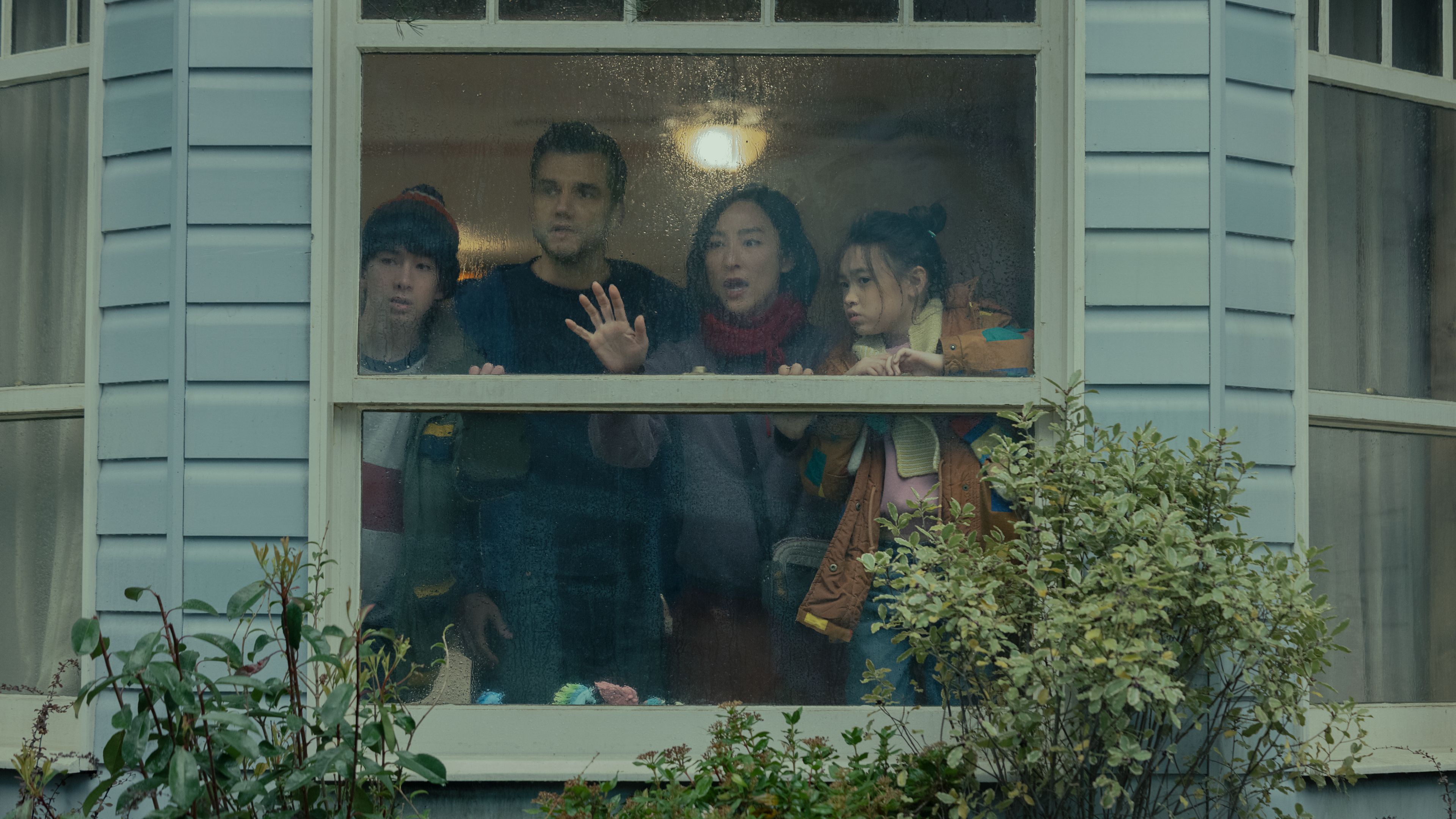
The Last House 2 Chances At Netflix Addressed By Wagner Moura After Shocking Ending
Wagner Moura, the lead in Netflix's *The Last House*, discusses the potential for a sequel after the film's surprising ending.
Dive into Nicolaas Schmidt’s unique approach in September Afternoon and explore its themes of time, perception, and the mundane.
In simple terms, Nicolaas Schmidt’s debut feature film, September Afternoon, poses a central question: How can the ordinary and mundane become a powerful cinematic experience? The answer lies in Schmidt's exploration of ‘dead time’ and his innovative approach to storytelling that emphasizes the beauty in stillness and simplicity. The film invites viewers to immerse themselves in moments that lack traditional action or dialogue, prompting a reflection on the passage of time and human connection.
What happened is that Schmidt, a German filmmaker previously known for his short films, now presents a narrative that challenges conventional cinematic storytelling. At the upcoming Locarno Film Festival's 79th edition, September Afternoon will premiere as part of the Filmmakers of the Present Competition. Schmidt’s focus on atmosphere over action poses a risk of alienating audiences unaccustomed to his unique style, but it also provides a refreshing take on filmic engagement.
Central to September Afternoon is the theme of embracing banality in a world obsessed with extraordinary experiences. Schmidt believes that in contemporary society, where stimulation is paramount, there is a seductive power in the ordinary. He describes his filmmaking process as stretching mundane moments until their apparent emptiness reveals a deeper significance. This philosophy encourages viewers to reconsider how they perceive their daily lives and the hidden stories within seemingly trivial activities.
The film's plot revolves around a couple grappling with the reality of summer's end. Instead of a climactic journey or significant conflict, Schmidt focuses on their attempts to hold onto the joy of the season at the beach, juxtaposed with the harshness of elements that disrupt their idyllic expectations. This clash between the romanticized view of summer and the encroaching fall introduces viewers to the unpredictability of life itself, amplifying the film’s impact without conventional dramatic twists.
What sets September Afternoon apart is its dedication to visual and auditory elements over dialogue. Schmidt’s choice to utilize ‘dead time’ transforms moments of silence into spaces for contemplation. The cinematography by Thomas Oswald is pivotal in crafting this experience, echoing Schmidt’s vision of juxtaposing stillness with subtle movement. Ambient sounds and music play crucial roles, enhancing the emotional depth without overshadowing the visual storytelling.
Such choices reflect a broader commentary on modern cinematic practices that prioritize fast-paced narratives and rapid dialogue exchanges. Schmidt resists this trend, arguing for the significance of allowing audiences to reflect on what is happening onscreen, rather than being bombarded by relentless action. This approach could serve as a critical examination of viewers’ expectations and the nature of artistic interpretation.
Schmidt identifies as a ‘greyalisateur,’ a term he uses to indicate a middle ground, embracing ambiguity and relativity in his film direction. This philosophy is particularly relevant in September Afternoon, where Schmidt blurs the lines between narrative clarity and artistic abstraction, encouraging viewers to engage actively with the film's environment rather than passively consuming a story.
Formerly influenced by elaborate commercial aesthetics and poetic cinema, Schmidt infuses September Afternoon with a sense of introspection that may resonate deeply with those willing to engage with its subtleties. His desire to forge a connection with audiences through shared experiences of mundane reality reflects a longing for community outside the mainstream narratives.
In crafting this film, Schmidt acknowledges the necessity of challenging audience expectations, especially regarding storytelling formats that rely heavily on action and dialogue. He articulates a vision of cinema that highlights the importance of allowing space for boredom—a crucial element Schmidt argues can lead to a more profound engagement with the narrative.
By presenting audiences with scenes that initially seem devoid of excitement, the film encourages deeper reflection on the mundane. This risk pays off, as it invites viewers to find meaning in stillness and recognize that even ordinary moments can be filled with significance.
Moreover, this approach elucidates a modern philosophical inquiry: In an age where entertainment is often served in rapid, enticing bites, can audiences learn to appreciate the extended pauses of life?
As September Afternoon reaches its conclusion, the couple's struggle against the elements not only becomes a metaphor for their emotional turbulence but also encapsulates the inherent unpredictability of life’s journey. Their aspirations for a perfect summer experience encounter unforeseen challenges, transforming the narrative arc into a commentary on human resilience in the face of disappointment.
This climax serves not only as a culmination of the film's themes but also connects back to Schmidt's exploration of ordinary life. The unresolved nature of their experiences critically mirrors the ambiguity present in everyday situations—moments of joy can swiftly shift into trials, a temporal dance that reflects the unpredictability of human emotion and connection.
In summary, September Afternoon invites audiences to reconsider their relationship with cinema and reality itself. By focusing on moments traditionally seen as uneventful, Nicolaas Schmidt encourages a dialogue about the value of time, presence, and perception in an era defined by haste and distraction. Audiences who embrace this departure from the conventional may find themselves immersed in a cultural commentary that celebrates the richness of life's quieter moments.
For anyone intrigued by the potential to find beauty in stillness, September Afternoon offers a rich landscape deserving of attention, while positioning itself as a relevant piece in today’s cinematic explorations. Schmidt's work ultimately becomes a reflection not just of his artistic identity, but also of a broader cultural yearning for deeper connections in the face of modern life's relentless pace.
As Schmidt continues to carve out his niche within the film industry, audiences might also find resonance in his rejection of uniformity, suggesting a call for greater diversity of thought within contemporary filmmaking. In doing so, he cultivates a community that appreciates shared experiences, providing a refreshing perspective in an overstimulated world.
Related guides include our in-depth analysis of The Devil's Mouth, exploring how silence and environment can shape narrative, and Star Wars: Episode III – Revenge of the Sith for its own pivotal dramatic shifts amid chaos.
Movie explanation
EpisodeBreakdown may use automated tools to assist research, drafting, and formatting. Published pages are governed by our editorial and corrections policies, and source links are shown when they are available in the article record.
Discovery source: The Hollywood Reporter. The source identifies where the topic was discovered; EpisodeBreakdown is responsible for the commentary published on this page.
Reader response
Reactions and poll results are based on real reader responses. No account is required.