6 Remarkable Performances Where Actors Portrayed Family
Exploring six standout performances in films where actors portrayed their own family members, shedding light on unique challenges and emotional depth.
Analyzing the movie-of-the-week style of Star Trek: Strange New Worlds and its implications for modern streaming audiences.
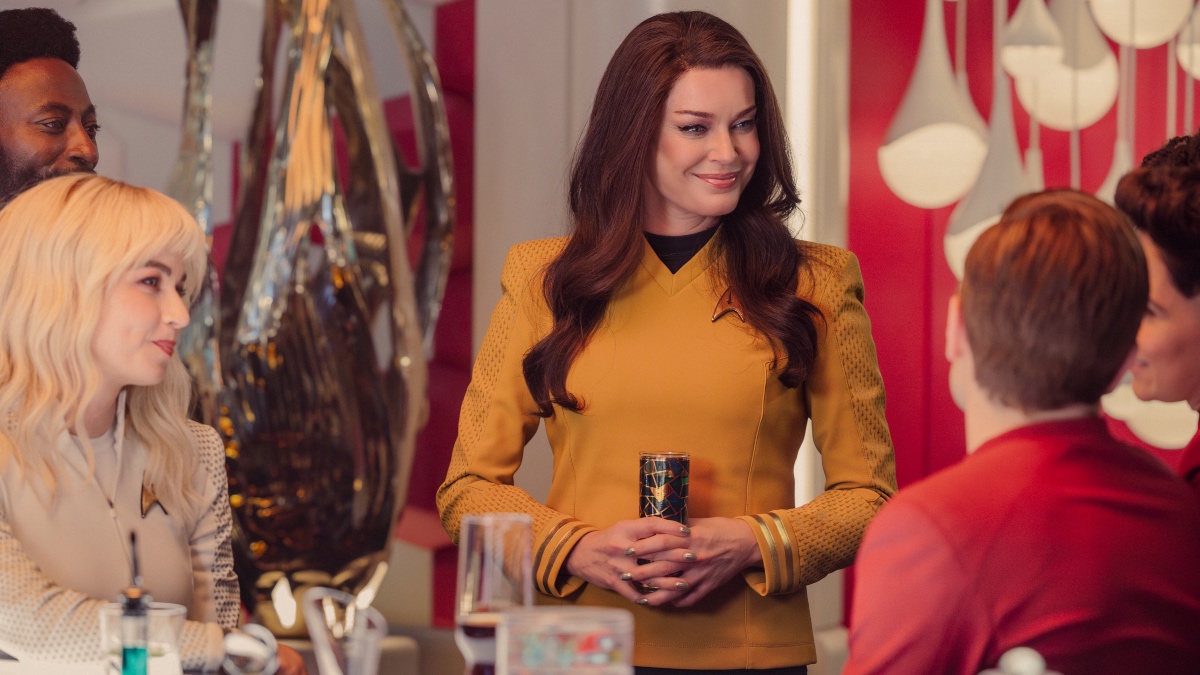
Star Trek: Strange New Worlds reinvents the episodic format for modern viewers by presenting stories that feel complete within a single episode. In contrast to sprawling narratives common in contemporary streaming series, this approach allows for a refreshing exploration of various genres while remaining true to the Star Trek ethos. In simple terms, the question at the heart of the show is: How can storytelling thrive when detached from exhaustive arcs? The answer lies in its ability to deliver satisfying, standalone adventures that resonate emotionally and thematically.
In today's era dominated by binge-watching and serialized narratives, Strange New Worlds stands out with its movie-of-the-week format. Each episode serves as its own self-contained adventure, much like classical television storytelling, where the stakes often reflect humor and lightheartedness. A perfect example can be seen in the episode "Human Best Friend," where the light-hearted escapades of Ortegas and Scotty on a pleasure planet showcase this dynamic.
The episode leverages low-stakes scenarios to foster a relaxed and entertaining experience. In a landscape where many shows prioritize overarching plots, this format invites viewers to engage with the narrative without the burden of recalling extensive backstory. Hence, it serves as a refreshing departure that harks back to earlier Star Trek iterations where exploration and diverse storytelling were paramount.
One of the striking features of Strange New Worlds is its seamless blending of genres. As noted by Anson Mount, who portrays Captain Pike, the series has found a confident footing in which experimentation is not only welcomed but celebrated. Season highlights include a romantic musical episode and philosophical inquiries reminiscent of classic Trek themes. This genre-bending not only attributes to the show’s playfulness but also aligns with the Star Trek mission: exploration, imagination, and curiosity.
The commitment to diverse storytelling allows each episode to probe into various themes, prompting viewers to ponder complexities even in humorous contexts. For instance, the lighthearted antics in "Human Best Friend" balance with the heavier, existential stakes explored in preceding episodes, such as "The Griffin Incident." This flexibility is a hallmark of the show's identity, affirming its roots in the broader Star Trek narrative while infusing fresh energy.
Character development in Star Trek: Strange New Worlds remains crucial, even when told in episodic formats. Although some storylines, such as Spock’s complicated love life, transcend single episodes, the character arcs are less invasive than traditional serialized narratives. Each episode focuses on different characters, allowing them to shine uniquely.
For instance, Uhura's growth throughout the season illustrates how her past experiences shape her present decisions. Moreover, the ensemble cast's chemistry creates a relatable and compelling atmosphere. The writers craft scenarios allowing characters to express themselves beyond their established archetypes, offering room for exploration during various adventures.
What makes Strange New Worlds particularly engaging is its refusal to adhere strictly to long-form narrative conventions. Each episode often comes with a set of stakes that allow the characters to face challenges without the overarching pressure of dramatic resolutions that plague other serialized shows. In the modern streaming landscape, this is a rare and necessary reminder of the power of isolated storytelling.
In conclusion, the format and methodology of Star Trek: Strange New Worlds serves both as a tribute to its predecessors and a commentary on the limitations of modern television storytelling. By prioritizing episodic experiences over convoluted arcs, the series taps into a nostalgic vein while remaining relevant to contemporary audiences. As viewers continue to navigate the complexities evoked by streaming platforms, the ability to enjoy stories on a weekly basis is a growing attractor.
Star Trek: Strange New Worlds is not just a revival of the classic series but a pivotal shift in how future storytelling may take shape in the streaming era. Its successful blend of genres, the embrace of standalone adventures, and character-driven narratives showcase a path that other shows can emulate. The adventurous spirit of Star Trek remains unscathed, proving that even in a changing media landscape, curiosity, and imagination prevail.
For further reading on character development and the significance of episodic formats in contemporary storytelling, you might explore Understanding the Duality of Patricia in Widow's Bay and Analyzing 'Drag': A Heist Comedy with Depth.
Movie explanation
EpisodeBreakdown may use automated tools to assist research, drafting, and formatting. Published pages are governed by our editorial and corrections policies, and source links are shown when they are available in the article record.
Discovery source: Den of Geek. The source identifies where the topic was discovered; EpisodeBreakdown is responsible for the commentary published on this page.
Reader response
Reactions and poll results are based on real reader responses. No account is required.