Bruce Willis’ best time-travel film isn’t the one fans think—it’s Terry Gilliam’s 12 Monkeys, a 1995 sci-fi classic that’s often overlooked despite its critical acclaim and Oscar nomination for Brad Pitt.
Bruce Willis’ Time-Travel Masterpiece Wasn’t Looper: 12 Monkeys Is His Best Sci-Fi Film
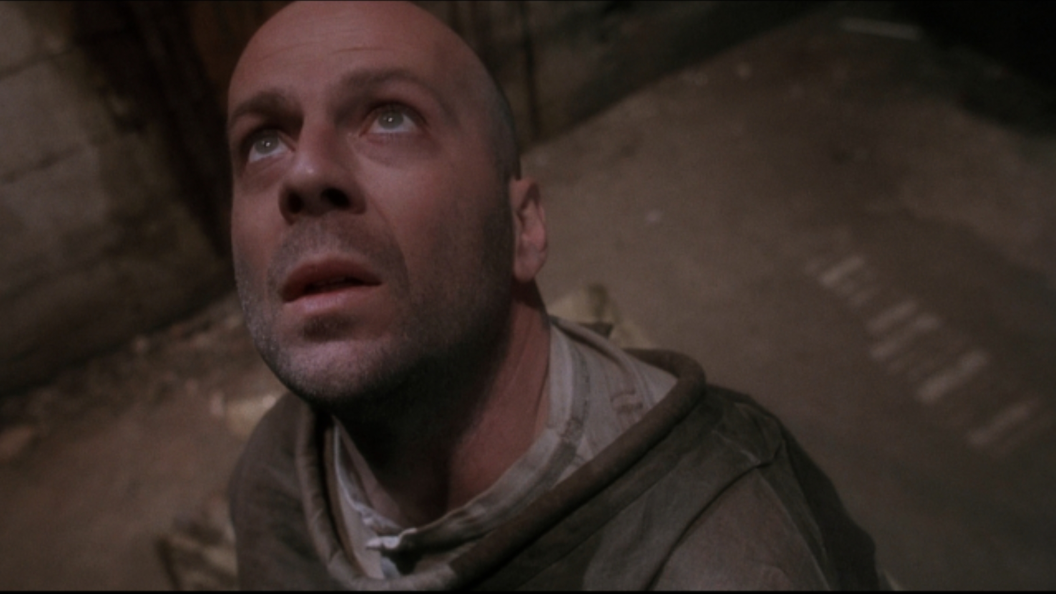
ComicBook.com has confirmed that Bruce Willis’ most acclaimed time-travel film isn’t the one fans typically cite—Rian Johnson’s Looper (2012). Instead, the actor’s best time-travel work is Terry Gilliam’s 12 Monkeys (1995), a critically adored sci-fi thriller that remains underappreciated decades later.
The publication notes that Willis starred in two time-travel movies 17 years apart: 12 Monkeys (1995) and Looper (2012). While Looper is widely celebrated as Willis’ standout time-travel film, 12 Monkeys has been overlooked despite its cultural impact and technical brilliance.
Terry Gilliam’s Vision and Critical Reception
Terry Gilliam, known for his work with Monty Python, directed 12 Monkeys after a string of underappreciated films including Time Bandits (1981), Brazil (1985), The Adventures of Baron Munchausen (1988), and Fear and Loathing in Las Vegas (1987). The film was a modest $29 million production that grossed $168.83 million worldwide and earned an 88% rating on Rotten Tomatoes.
Willis played James Cole, a prisoner from 2035 sent back to 1990 to prevent a pandemic. His character intersects with Brad Pitt’s Jeffrey Goines, a mentally unstable inmate at a psychiatric hospital, and psychiatrist Kathryn Railly (played by a then-unknown Sarah Polley). The film’s complex time-loop narrative and thematic depth have drawn comparisons to the French short film La Jetée (1962), which 12 Monkeys remade.
Why 12 Monkeys Wasn’t Recognized as a Masterpiece at Release
Despite its critical success, 12 Monkeys struggled commercially compared to its potential. Gilliam’s films were rarely celebrated during their initial releases, and 12 Monkeys was no exception. The movie’s $29 million budget was modest for the era, but its $168.83 million worldwide gross was impressive for a sci-fi thriller.
Brad Pitt earned his first Oscar nomination for his role as Jeffrey Goines, a performance that critics praised for its psychological intensity. The film’s influence on later time-travel narratives remains significant, particularly in its use of visual storytelling and thematic depth.
The 12 Monkeys TV Series and Legacy
Three years after Looper (2015), 12 Monkeys was adapted into a four-season SYFY television series that aired from 2015 to 2018. The series expanded the original story while maintaining its complex time-travel mechanics and character dynamics. It won awards for cinematography and was praised for its intricate plotting.
The TV adaptation has helped reintroduce 12 Monkeys to new audiences, though it hasn’t matched the original film’s critical acclaim. The series’ success highlights the enduring appeal of Gilliam’s time-travel concept and Willis’ ability to anchor the narrative.
Why This Matters for Willis’ Filmography
For fans of Willis’ sci-fi work, 12 Monkeys represents a pivotal moment in his career. While Die Hard (1988) launched him as a global action star, 12 Monkeys showcased his versatility in complex, character-driven narratives. The film’s legacy underscores how Willis’ career has evolved from comedy to sci-fi and action, with 12 Monkeys being a rare example of his depth in the genre.
The confirmation that 12 Monkeys is Willis’ best time-travel film challenges the assumption that Looper is his most acclaimed time-travel work. This distinction highlights the importance of critical reception and historical context in evaluating a filmmaker’s legacy.
Why 12 Monkeys Is Often Overlooked
Despite its acclaim, 12 Monkeys has been overshadowed by later films and the rise of Willis’ more recent projects. The film’s complex narrative and thematic depth have made it a cult classic rather than a mainstream hit, which explains why it’s often forgotten by casual audiences.
The publication emphasizes that 12 Monkeys remains a benchmark for time-travel storytelling, with its influence on modern sci-fi films and TV series. Its legacy continues to inspire filmmakers and audiences alike, even as it remains underappreciated in mainstream discourse.
Terry Gilliam’s Vision and Critical ReceptionWhy 12 Monkeys Wasn’t Recognized as a Masterpiece at ReleaseThe 12 Monkeys TV Series and LegacyWhy This Matters for Willis’ Filmography
EpisodeBreakdown may use automated tools to assist research, drafting, and formatting. Published pages are governed by our editorial and corrections policies, and source links are shown when they are available in the article record.
Discovery source:ComicBook.com. The source identifies where the topic was discovered; EpisodeBreakdown is responsible for the commentary published on this page.
Reader response
What did you think?
Be the first to react
Reactions and poll results are based on real reader responses. No account is required.
Continue the story
movies
Harrison Ford’s 1993 Thriller Was Part of a 1960s TV Franchise, and Its Sequel Flopped Without Him
Harrison Ford’s 1993 thriller The Fugitive is part of a decades-old franchise that began with a 1960s TV show. Warner Bros. tried to make a sequel in 1998 without Ford, but it flopped with mixed reviews and low box office.Read next →